
European Rail Transport procurement is rarely a simple choice between the lowest price and the fastest delivery. Buyers must align technical specifications, maintenance support, safety requirements, and long-term operating costs across different networks. Eurostat reported that rail carried about 5.5% of EU inland freight transport in 2022, measured in tonne-kilometres. That modest share makes dependable capacity and practical procurement decisions especially important for operators competing with road freight.
The European Commission’s 2024 report on the European Union rail market highlights persistent differences in infrastructure use, service performance, and national rail systems. These differences matter when sourcing rolling stock, components, or transport services. A locomotive that meets one buyer’s needs may still require different approvals, adaptations, or support elsewhere. Details count. So does the service plan after delivery.
This guide introduces seven practical tips for evaluating suppliers, comparing whole-life costs, checking interoperability, and managing procurement risk. It draws on public European rail-sector data and established procurement considerations, while recognizing that project conditions vary. A low bid can look attractive on paper. It may not stay low once spare parts, staff training, and downtime are included. Even careful buyers can miss things. Use the tips as a starting point, then verify each requirement against current regulations, technical standards, and the intended route.
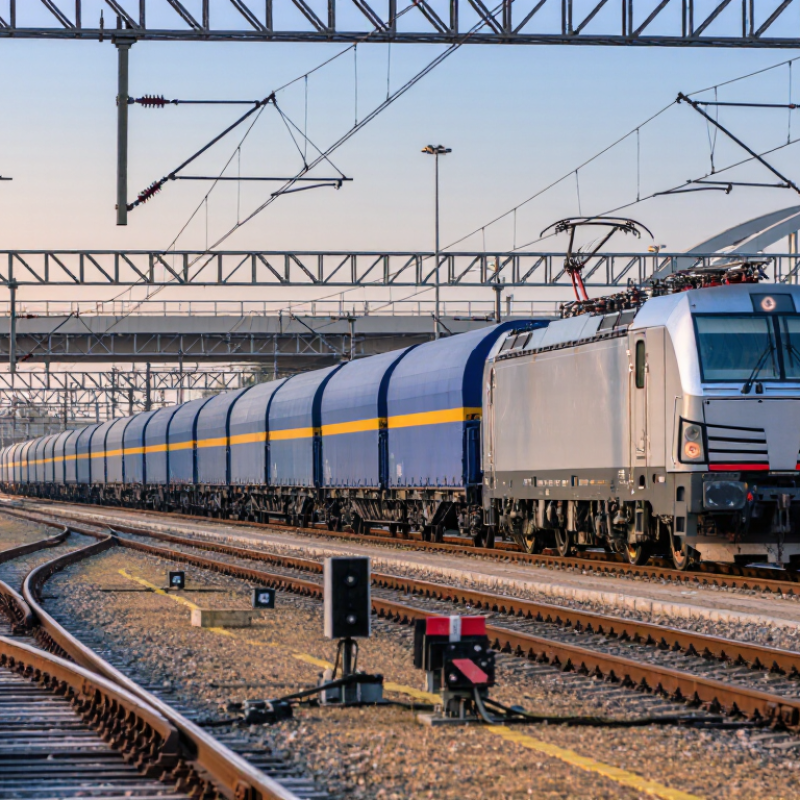
Define Procurement Goals and Rail Service Requirements
European rail procurement should begin with a measurable operating problem. Is the priority lower cost, predictable transit, greater capacity, or lower emissions? The answer shapes every tender requirement. The European Commission’s Sustainable and Smart Mobility Strategy targets a 50% increase in rail freight traffic by 2030. Capacity will therefore become a practical procurement risk, not just a policy issue.
Write service requirements around real shipments. Specify origin, destination, loading windows, border procedures, wagon availability, and delivery tolerance. A useful specification might require 95% on-time delivery, weekly capacity commitments, and electronic event updates within 30 minutes. Include recovery procedures for missed connections. Eurostat reported approximately 386 billion tonne-kilometres of EU rail freight in 2022, showing the network’s scale and continued commercial importance. Still, volume data cannot replace route-level evidence. Request performance records for comparable corridors, including cancellations, dwell time, damage incidents, and claims resolution.
Cost should include accessorial charges, terminal handling, storage, and disruption exposure. Emissions should use a consistent calculation method, preferably per tonne-kilometre. Safety, insurance, licensing, and data protection requirements must be documented clearly. I have seen procurement teams overvalue headline tariffs and underestimate terminal delays. That mistake is expensive. A perfect scorecard is unrealistic. Leave room for seasonal demand, infrastructure works, and cross-border variability. Reassess the requirements after the first quarter of live operations.
European rail procurement is not one market. Infrastructure, operating rules, and supplier capacity vary by country. A depot upgrade in one region may require different approvals and technical interfaces from a similar project across the border. Map routes, track gauge, power systems, maintenance access, and delivery constraints before inviting bids. Small details matter. A platform’s clearance or a night-work window can change the cost.
Tip 1: Build a country-by-country requirements matrix. Check applicable interoperability specifications, national rules, safety obligations, and local approval steps with qualified advisers. Requirements can change, so confirm current guidance before setting tender terms. Tip 2: Separate mandatory requirements from preferences. This helps suppliers price accurately and reduces avoidable clarification rounds. It also makes bid comparisons fairer.
Tip 3: Assess suppliers beyond the headline price. Review relevant project experience, service coverage, spare-parts lead times, quality controls, and financial resilience. Ask how they will support equipment at a remote maintenance site in winter, not just how quickly they can ship it. Tip 4: Test the market early. A request for information can reveal capacity limits and compatible alternatives. Still, procurement teams may misjudge how much local support a project needs; revisit assumptions with operators and maintainers before award.
| Tip | Market or procurement dimension | Practical guidance | Supplier options to assess | Key checks and evidence |
|---|---|---|---|---|
| 1. Define the operating geography | National networks, cross-border routes, and infrastructure access | Map origin, destination, border crossings, terminals, gauge, electrification, loading gauge, and route restrictions before requesting offers. Operating conditions and access arrangements can differ by country and corridor. | Rail freight undertakings; intermodal operators; terminal and transshipment providers; wagon or locomotive lessors. | Route feasibility; terminal opening hours and capacity; infrastructure access requirements; border procedures; expected transit time and service frequency. |
| 2. Match the service to the shipment | Freight type, volume, handling, and service model | Specify commodity, annual and peak volumes, shipment size, temperature or security needs, dangerous-goods status, and required collection and delivery points. Compare full trainload, single-wagon, and intermodal solutions where available. | Full-train operators; wagonload services; combined-transport operators; road-rail and terminal service providers. | Equipment availability; payload and dimensional limits; handling capability; service calendar; capacity commitments; contingency arrangements. |
| 3. Check procurement rules early | Public-sector and utility procurement | Determine whether the buyer and contract fall under applicable EU or national public procurement rules. The EU procurement framework includes separate directives for public-sector and utilities contracts; coverage and thresholds depend on the buyer, contract type, value, and current rules. | Open, competitive tendering; framework agreements; appropriately qualified rail-service and equipment suppliers. | Buyer status; estimated total contract value, including options; applicable procedure and publication requirements; equal treatment, transparency, and conflict-of-interest controls. Confirm current national implementation and thresholds. |
| 4. Verify safety and market access | Railway safety responsibilities and authorisations | Check that the operating undertaking has the required safety certification and that infrastructure access and vehicle authorisations are suitable for the planned service. Responsibilities may involve the European Union Agency for Railways, national safety authorities, and infrastructure managers, depending on the case. | Licensed or otherwise appropriately authorised railway undertakings; certified maintenance providers; vehicle owners and maintainers. | Applicable safety certificate and scope; vehicle authorisation and registration; maintenance arrangements; national requirements; clear allocation of safety duties between contracting parties. |
| 5. Assess interoperability and technical fit | Technical Specifications for Interoperability and network compatibility | For vehicles and relevant subsystems, establish which Technical Specifications for Interoperability apply and confirm compatibility with each intended route. Requirements can depend on vehicle type, area of use, infrastructure, and applicable exemptions or transition provisions. | Rolling-stock manufacturers; vehicle lessors; component suppliers; testing, assessment, and maintenance service providers. | Technical file and conformity evidence; applicable interoperability constituents and TSI requirements; gauge, axle load, power supply, signalling, and train-control compatibility; maintenance support. |
| 6. Plan for signalling and cross-border operations | ERTMS, national train-control systems, and corridor readiness | Ask which signalling and train-control systems are required on the route. The European Rail Traffic Management System includes ETCS and GSM-R; deployment and transition vary across networks, so route-specific compatibility must be verified rather than assumed. | Locomotive and trainset providers with suitable onboard equipment; signalling integrators; upgrade and maintenance specialists. | Onboard and trackside compatibility; required ETCS level and baseline where applicable; national-system needs; software configuration; driver and maintenance readiness; upgrade plan. |
| 7. Compare whole-life value and resilience | Commercial terms, performance, sustainability, and supply risk | Evaluate total cost and operational risk, not just the quoted rate. Define measurable service levels, capacity, recovery arrangements, indexation, data access, and contract exit or transition provisions. Use emissions data with a consistent, disclosed calculation method. | Rail operators; rolling-stock and component suppliers; maintenance providers; logistics integrators; digital tracking and planning providers. | Cost inclusions and exclusions; punctuality and claims definitions; capacity and disruption response; emissions methodology; cybersecurity and data terms; spare-parts availability; contract duration and exit rights. |
Regulatory and technical requirements vary by contract, country, route, and vehicle. Verify current EU legislation, national implementation, infrastructure-manager rules, and route-specific conditions before tendering or award.
European rail procurement should start with the full cost of moving each shipment, not the quoted rate alone. Include terminal handling, storage, first- and last-mile transport, equipment, and likely delays. A low train tariff can lose its appeal when containers wait two days for onward collection. Ask suppliers to show which charges are fixed and which depend on volume or route conditions. Compare the same origin, destination, shipment size, and service frequency.
Check capacity against your actual shipping pattern. Weekly averages can hide sharp seasonal peaks. Confirm available space by departure, container type, and booking deadline, then test what happens when demand rises. Reliability needs equally specific evidence: request recent punctuality data, cancellation records, and typical recovery times after disruption. Figures should cover the routes you plan to use, not a broad network average. Small details matter.
Service quality is harder to reduce to a spreadsheet, but it shapes daily work. Ask how quickly the operations team responds, how shipment status is shared, and who handles missed connections. Try a sample escalation scenario before signing. Some procurement models overvalue tidy service-level scores; they may not reflect the late-night call when a terminal is full. Our assumptions can be wrong, too. Revisit the comparison after a trial period using actual invoices, capacity used, delays, and staff feedback.
European rail procurement needs more than a low price. Treat sustainability as a measurable requirement. The European Environment Agency’s Transport and Environment Report identifies rail as one of Europe’s lowest-emission motorised transport modes. Request energy use per passenger-kilometre or tonne-kilometre, renewable electricity evidence, and lifecycle carbon data. Check traction power, empty mileage, recycled materials, and noise near residential areas. Numbers matter.
Safety requires operational proof. Review incident rates, near-miss reporting, driver training, maintenance intervals, and emergency response times. The European Union Agency for Railways’ Railway Safety Performance Reports provide useful benchmarks for national accident trends. Ask suppliers to explain wheel inspections, braking tests, cybersecurity controls, and degraded-mode procedures. Visit a depot. Observe the records.
Cross-border compliance can quietly damage schedules. Confirm Technical Specifications for Interoperability coverage, infrastructure compatibility, language requirements, and national safety authority approvals. Request a route-by-route matrix before contract award. Verify gauge, signalling, electrification, axle-load, and border handover requirements. The European Commission’s Sustainable and Smart Mobility Strategy targets a 50% increase in rail freight by 2030, increasing pressure on international capacity. Procurement teams should also test disruption plans, data-sharing formats, and responsibility during delays. We sometimes overtrust certificates. Independent audits remain necessary. Some sustainability claims may still lack consistent boundaries, so require assumptions, raw data, and annual verification.
Structure Contracts, Monitor Performance, and Manage Supplier Risk
European rail transport procurement becomes difficult when a contract crosses borders, currencies, infrastructure rules, and operating cultures. Strong buying decisions begin with a clear service map. Define routes, train paths, equipment interfaces, response times, and ownership of delays before requesting prices. Separate mandatory requirements from preferred features. Keep it measurable. Contract clauses should cover index-linked pricing, capacity reservations, maintenance access, data sharing, and change control. Include service credits for repeated failures, but avoid penalties that encourage unsafe shortcuts. Require transparent evidence for invoices, performance claims, and subcontractor involvement. Document the reason.
Performance monitoring needs more than a monthly dashboard. Track punctuality, cancelled services, asset availability, incident response, invoice accuracy, and corrective-action closure. Use the same definitions across every supplier. A five-minute delay may be minor operationally, but repeated delays can disrupt crew planning and passenger connections. Review trends at weekly and quarterly levels. Ask what changed, who owns it, and when recovery will be tested. Field audits matter. Visit control rooms, depots, and handover points when access permits. Paper compliance can hide practical weaknesses.
Supplier risk deserves a live register, not a once-a-year questionnaire. Assess financial resilience, specialist staffing, spare-part access, cyber controls, insurance, and reliance on single subcontractors. Create credible alternatives for critical routes or components. Dual sourcing is useful, but it can increase interface complexity and cost. Test contingency plans through realistic disruption exercises. Some assumptions will fail. That is valuable evidence. After each exercise, revise responsibilities, escalation contacts, lead times, and acceptance criteria. Procurement teams should record unresolved risks openly, rather than hiding them inside optimistic forecasts.