
Buying rail transport services across Central Asia requires more than comparing freight rates. This 2026 guide examines the practical decisions behind dependable regional movement. It covers Kazakhstan, Uzbekistan, Turkmenistan, Kyrgyzstan, and connections toward China, Russia, the Caucasus, and Europe.
Yann Duval, Chief of Trade Policy and Facilitation at UNESCAP, has said, “Trade facilitation is about making international trade faster, cheaper, and more predictable.” That principle fits Central Asia Rail Transport closely. Buyers must study border procedures, track gauges, wagon availability, terminal capacity, and seasonal disruptions. A route can appear economical on paper. Then, a gauge change adds hours. A crowded terminal adds days.
Experience matters here.
A strong purchasing decision compares the full transport chain, not only the line-haul price. Ask carriers about transit-time records, cargo-handling standards, damage prevention, insurance, and shipment visibility. Confirm whether the provider manages transshipment directly or relies on several subcontractors. Their answer may reveal hidden delays.
This guide also considers sustainability, infrastructure quality, and contract transparency. Buyers should request recent performance data, clear service exclusions, and realistic delivery windows. Some forecasts remain uncertain. Weather, regional construction, and policy changes can alter schedules quickly. That limitation deserves attention, not optimistic language.
Central Asia Rail Transport is developing rapidly, but it is not uniform. One corridor may offer strong capacity while another depends on scarce equipment. The best choice balances cost, resilience, compliance, and communication. Small details decide large shipments.
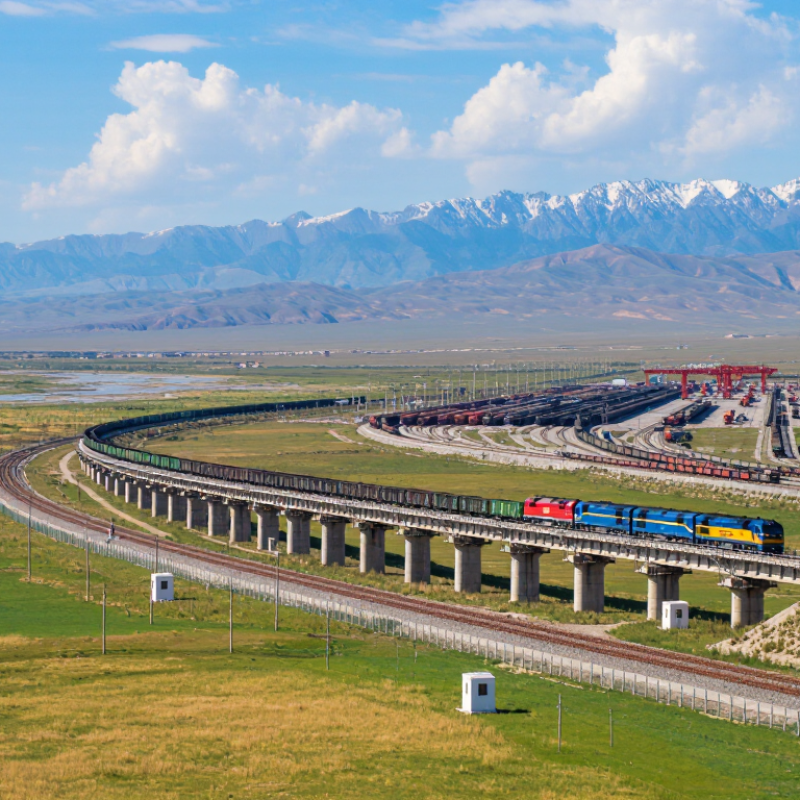
For 2026 buyers, Central Asia’s rail network is becoming a practical bridge between East Asia, the Caspian region, and Europe. The main east-west route crosses China, Kazakhstan, the Caspian Sea, the South Caucasus, and Türkiye. North-south links connect Kazakhstan and Uzbekistan with Turkmenistan and Iran. Rail gauges change at several borders, creating transshipment risks. The World Bank’s 2023 Middle Trade and Transport Corridor report estimates potential freight growth from about 2.3 million tonnes in 2021 to nearly 11 million tonnes by 2030. It also targets transit times of roughly 14 days. The opportunity is real. The network remains uneven.
For procurement teams, route design matters more than a low headline rate. Check wagon availability, terminal capacity, customs data exchange, ferry schedules, and cargo insurance conditions. The CAREC Corridor Performance Measurement and Monitoring reports repeatedly highlight border procedures and transshipment as major performance variables. A delayed inspection can erase a week of planned savings. Buyers should request corridor-level service records, not only annual averages. A perfect schedule is unrealistic. Build buffer days.
Tips: Compare at least two corridor options for each shipment. Confirm the loading gauge, axle limits, and terminal handling equipment. Ask for disruption procedures in writing. Use monthly performance data where available, because seasonal congestion can distort annual figures. Small pilot shipments reveal operational weaknesses faster than spreadsheets.
Central Asian rail freight operates through scheduled corridors, border handovers, and changing gauges. Buyers should expect several operational layers. A train may cross Kazakhstan, Uzbekistan, Turkmenistan, or Kyrgyzstan before reaching its destination. Each border can involve document checks, wagon inspections, customs clearance, and locomotive changes. Gauge differences matter. A 1,520-millimetre network meets a 1,435-millimetre network near key gateways, requiring transshipment or bogie exchange.
The World Bank’s Connecting to Compete 2023 report scores logistics performance from 1 to 5. Kazakhstan received 2.7, while Uzbekistan received 2.6. These figures suggest improving capability, but they also reveal uneven service quality. The CAREC Corridor Performance Measurement and Monitoring Annual Report tracks border delays, transport costs, and shipment reliability across regional corridors. Its findings show that border procedures remain a practical risk, even when track capacity is available. Buyers should request separate estimates for line-haul time, terminal dwell time, and border processing. Do not treat one transit figure as guaranteed.
Operational details often decide the result. A sealed container waits beside a crane. Paperwork moves between offices. Then the wagon moves again. Cargo planning should allow buffer days, especially during winter weather and harvest seasons. Digital tracking is useful, but coverage may weaken between terminals. The system is not perfectly predictable. That matters. Equipment availability, axle-load limits, and last-mile trucking can change the final delivery date. A reliable procurement review should compare at least three recent corridor records, not one attractive quotation.
In 2026, buyers should compare Central Asian rail routes by reliability, not distance alone. The World Bank’s Logistics Performance Index 2023 covers 139 economies and evaluates customs, infrastructure, shipment quality, tracking, and timeliness. These measures expose weak links that route maps often hide. Distance alone is misleading.
Check gauge compatibility, axle-load limits, loading-gauge clearance, and terminal handling capacity before signing a contract. A route may require cargo transfer at a gauge break, adding labor, inspection, and delay risk. The UNECE Inland Transport Committee highlights interoperability, digital information exchange, and border coordination as key rail efficiency factors. Ask for recent performance records, not attractive forecasts. Request monthly data for on-time delivery, dwell time, wagon availability, damage claims, and average border waiting.
Equipment selection must match the cargo’s physical reality. General wagons suit pallets and machinery, while temperature-sensitive goods need verified monitoring and backup power. Confirm crane capacity, loading dimensions, secure storage, and emergency procedures at every terminal. CAREC’s Corridor Performance Measurement and Monitoring reports track border-crossing time and cost, showing why terminal-level data matters. My own planning mistake was trusting corridor averages. One congested terminal changed the entire delivery schedule.
Service-provider due diligence should include licenses, insurance limits, subcontractor controls, and a written escalation process. Require milestone tracking from origin loading to final unloading. Compare at least three seasons of records when possible. A low quotation can conceal repositioning fees, storage charges, or weak claims handling. Keep a contingency budget. Rail remains efficient, but forecasts are never guarantees.
2026 Best Central Asia Rail Transport Guide for Buyers
Buying rail transport across Central Asia requires more than comparing a headline rate. Request a written quote covering pickup, terminal handling, rail freight, border procedures, storage, and final delivery. Check the currency, fuel adjustments, insurance limits, and payment terms. A low price may exclude customs support or last-mile trucking. That gap can become expensive.
Prepare commercial invoices, packing lists, certificates of origin, transport instructions, and accurate cargo descriptions. Confirm whether translations, permits, or special packaging are required for your commodity. Ask about rail-gauge changes, border inspection procedures, and document cut-off times. Use one document checklist for every shipment. Small errors can delay a container for several days. Experienced buyers also request the planned routing, transfer points, estimated transit range, and emergency contact details in writing.
Tips: Compare total delivered cost, not only rail rates. Add a realistic buffer for storage and border delays. Confirm delivery appointments before dispatch. Photograph seals and cargo condition at handover. Keep digital and printed document copies. A common mistake is trusting an optimistic transit estimate. Ask what happens if the train misses its connection. Also review insurance wording carefully; some policies exclude unattended cargo or certain handling stages. Good planning is practical, but never perfect. Leave room for weather, inspections, and revised schedules.
This chart shows practical planning-time estimates for rail freight moving from China to major Central Asian destinations. The figures represent typical door-to-door planning windows and include border handling, customs coordination, and terminal transfers. Buyers should confirm the final schedule, freight quotation, cargo classification, export documents, commercial invoice, packing list, certificate of origin, and any required transit or import permits before booking.
Indicative ranges: Almaty 12–18 days, Bishkek 14–20 days, Tashkent 18–25 days, Dushanbe 22–30 days, and Ashgabat 25–35 days. Actual delivery depends on origin, border congestion, customs inspection, cargo type, weather, and final-mile arrangements.
Central Asia rail transport is entering a more demanding procurement cycle in 2026. Cross-border freight is growing, but route performance still depends on gauge changes, border capacity, and seasonal conditions. Buyers should examine the full corridor, not only locomotive or wagon specifications. A shipment can wait for hours beside a transfer yard during peak periods. Winter temperatures, dust, and uneven track maintenance also affect reliability.
Procurement teams are requesting stronger tracking, predictive maintenance, and clearer delivery commitments. These trends improve visibility, yet digital systems cannot fix weak customs coordination. Risk reviews should include alternative routes, spare-parts availability, local service skills, and insurance requirements. Contract terms need measurable targets for transit time, damage, data access, and delay reporting. Forecasts remain imperfect. A small pilot shipment may reveal more than a polished presentation.
Tips: Compare total landed cost, not the quoted rail rate. Inspect maintenance records and safety procedures before signing. Ask for recent corridor performance data, including border waiting times. Use staged purchasing, with review points after each delivery. Keep contingency funds for rerouting and seasonal disruption. Be cautious when a supplier promises uninterrupted service across every border.