China Top 10 Supply Chain Management And Logistics Companies
China’s logistics landscape is changing quickly. E-commerce volumes, smart warehouses, and expanding rail networks are reshaping business operations. This article introduces China’s top 10 Supply Chain Management And Logistics companies and examines how they create measurable value. The focus is practical: delivery coverage, warehouse capacity, digital visibility, transport coordination, customer service, and operational resilience.
Martin Christopher, Emeritus Professor of Marketing and Logistics at Cranfield University, described the field clearly: “Supply Chain Management is the management of upstream and downstream relationships with suppliers and customers to deliver superior customer value at less cost to the supply chain as a whole.” His view remains useful because logistics performance depends on connected relationships, not isolated transport activities. A delayed container, inaccurate inventory record, or poorly planned final-mile route can affect the entire chain.
Real operations matter.
The companies discussed here serve different markets and use different strengths. Some manage nationwide parcel networks, while others specialize in freight forwarding, ports, cold-chain services, contract logistics, or supply-chain technology. Their capabilities may appear impressive, yet no provider performs perfectly in every region or industry. Rankings can also change as fuel costs, regulations, customer expectations, and technology evolve. That limitation deserves attention.
The comparison therefore considers evidence-based indicators rather than brand popularity alone. Readers should review service scope, safety practices, delivery reliability, data security, sustainability efforts, and transparent reporting before choosing a partner. China’s logistics sector offers scale and innovation, but dependable performance still comes from disciplined execution, trained people, accurate data, and continuous improvement.
China’s Logistics Scale: RMB360.6 Trillion in Social Logistics Value in 2024
China Top 10 Supply Chain Management And Logistics Companies
China’s social logistics value reached RMB360.6 trillion in 2024. This figure shows the immense scale of domestic production, trade, and distribution. It measures the value of goods moving through the economy, not logistics company revenue.
At this scale, supply chain management requires more than trucks and warehouses. Strong operators coordinate factory schedules, inventory levels, customs documents, and final-mile delivery. Data systems can track a pallet from a coastal port to an inland workshop. Temperature controls also matter for food, medicine, and other sensitive goods. However, scale does not automatically mean efficiency. Empty return trips, delayed forecasts, and fragmented regional networks still create avoidable costs. That is where professional logistics management needs careful measurement and practical experience.
Tips:
Compare delivery accuracy, inventory turnover, damage rates, and response time before choosing a logistics partner. Ask for clear service records, backup routes, and transparent pricing. A low quoted fee may hide storage delays or weak after-sales support. Companies should also test a provider with a limited shipment volume first. This approach reduces risk and reveals operational weaknesses early. Even experienced managers can overtrust dashboards. On-site checks still matter.
Ranking the Top 10 by Revenue, Coverage, Technology, and Service Scope
China’s top ten supply chain and logistics companies should be judged beyond annual revenue. Revenue shows scale, but not resilience or execution quality. The China Federation of Logistics and Purchasing reported total social logistics value of approximately RMB 352.4 trillion in 2023. This figure highlights the market’s enormous operating depth.
Our ranking weighs four measurable areas: revenue, geographic coverage, technology maturity, and service scope. Coverage includes warehouse density, transport connections, and cross-border handling capacity. Service scope examines freight forwarding, contract logistics, cold-chain operations, inventory control, and customs coordination. The World Bank’s Logistics Performance Index 2023 gave China a score of 3.7, ranking it 19th globally. That result suggests strong infrastructure, but also room for more consistent international execution.
Technology separates established operators from merely large ones. Useful indicators include warehouse automation, shipment visibility, forecasting accuracy, and electronic documentation. UNCTAD’s Review of Maritime Transport 2024 reported continued growth in global container trade, increasing pressure on Chinese providers to manage disruption across ports and inland networks. Yet rankings remain imperfect. Private disclosures differ, and some companies report group revenue rather than logistics-only revenue. That can distort comparisons. A smaller operator with reliable regional coverage may outperform a larger network in delivery precision. Scale is not everything.
Top 10 Company Profiles Across 3PL, Freight, Express, and Contract Logistics
China Top 10 Supply Chain Management And Logistics Companies
The top ten company profiles reflect four operating fields: 3PL, freight, express, and contract logistics. Each model serves a different supply chain pressure. A 3PL provider may coordinate warehousing, transport, and returns through one control tower. Freight specialists focus on port bookings, customs documents, and route planning. Express operators prioritize speed, parcel visibility, and reliable last-mile delivery.
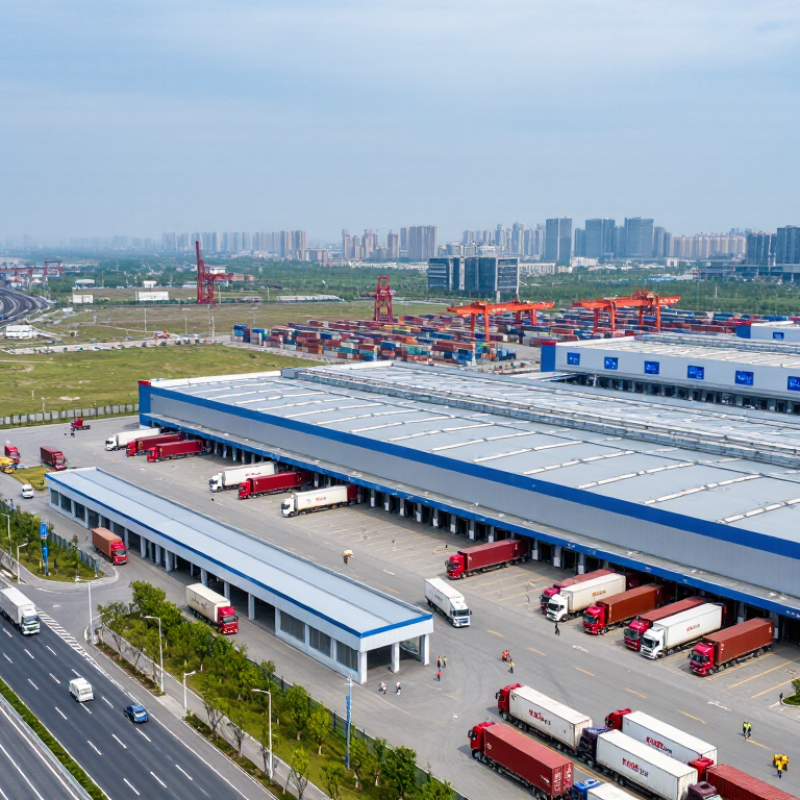
Contract logistics providers manage dedicated operations for manufacturers and retailers. Their work can include inbound receiving, barcode scanning, inventory checks, pick-and-pack tasks, and scheduled dispatches. A strong facility usually has clearly marked lanes, handheld scanners, and daily exception reports. These details matter more than impressive slogans. In practice, service quality often depends on data accuracy, driver communication, and how quickly staff handle a delayed shipment.
Comparing the ten profiles requires more than checking network size. Buyers should examine delivery performance, warehouse safety procedures, claims handling, system integration, and pricing transparency. A provider may offer excellent air freight but weaker domestic distribution. Another may manage inventory well but lack flexible peak-season capacity. That is an uncomfortable point. No company performs perfectly across every lane. Trial shipments, site visits, and written service-level targets can reveal gaps before a long contract begins. Costs also need careful review, because storage fees, fuel adjustments, and manual handling charges may change the real budget.
China Top 10 Supply Chain Management and Logistics Companies
China’s 2023 social logistics value reached approximately RMB 352.4 trillion. Industrial products represented the largest logistics flow, followed by imported goods and unit and resident goods. These official market dimensions provide context across freight, express, 3PL, and contract logistics without displaying company or brand data.
Source: China Federation of Logistics and Purchasing, 2023 national social logistics statistics.
Market Benchmark: Logistics Costs Equalled 14.4% of China’s GDP in 2023
China’s logistics economy remains large, but its cost burden is becoming more disciplined.
The China Federation of Logistics and Purchasing reported total social logistics costs of
18.2 trillion yuan in 2023. That equalled
14.4% of China’s GDP, down
0.3 percentage points from the previous year.
The figure matters for any top-ten supply chain management and logistics comparison. A
0.3-point improvement can represent major savings across transport, storage, handling, and administration. Yet the ratio is not perfect. It combines different industries, regions, and operating models. It does not show every delayed truck or half-empty warehouse.
Small details expose the real pressure.
A vehicle waiting four hours increases fuel, labour, and scheduling costs. A warehouse holding slow-moving stock consumes space and electricity. Empty return journeys weaken efficiency further. The World Bank’s 2023 Logistics Performance Index assesses customs, infrastructure, logistics competence, tracking, and timeliness. These measures support a broader view of operational quality.
China’s logistics leaders increasingly need
data-linked planning, regional inventory control, and better load matching.
The National Bureau of Statistics continues to show strong freight activity, but volume alone can mislead. More shipments do not always mean better supply chains. Cost reductions may also shift expenses elsewhere, which deserves closer review.
Digital Growth Context: China’s Express Deliveries Reached 174.5 Billion in 2024
China’s express delivery market reached 174.5 billion parcels in 2024, according to the State Post Bureau’s 2024 statistical bulletin. Volume grew 21.5% year on year. This scale is changing supply chain management from warehouse planning into real-time network control. Delivery data now connects sorting centers, transport routes, inventory points, and final-mile stations.
The China Federation of Logistics and Purchasing reported continued growth in logistics activity during 2024. Digital tools support this expansion through automated sorting, electronic waybills, route optimization, and cloud-based inventory systems. In practical operations, a parcel can trigger several decisions within seconds. A delayed scan may redirect a truck, adjust labor, or change a customer promise. Small data errors still create large costs.
World Bank findings on logistics performance also show why reliability matters, not only speed. Leading logistics operators are investing in traceability, predictive maintenance, and lower-emission transportation. Yet digital growth is not perfectly balanced. Rural coverage, data quality, and system integration remain uneven. More technology does not always mean better judgment. Managers still need experienced staff to question abnormal forecasts and inspect physical bottlenecks. The next top ten rankings should measure delivery volume, but also service resilience, data governance, and measurable operational accuracy.