Why Choose the Right Logistic Provider for Your Business?
Choosing the right Logistic Provider is crucial for any business. As supply chain expert Sarah Thompson stated, "A great logistics partner can shape your success." Selecting a suitable provider can influence your operations deeply. It affects delivery times, costs, and customer satisfaction.
In today's fast-paced market, businesses face multiple challenges. Poor logistics choices can lead to delays and increased expenses. Companies often overlook the importance of a competent logistic provider. They may choose based on price rather than reliability or service quality.
Reflection is key when evaluating your logistic needs. Think about previous experiences with logistic providers. Were they efficient? Did they meet your expectations? By assessing these factors, you can choose a provider that aligns with your business goals. A well-chosen logistic partner can drive growth and improve your bottom line.
Understanding the Role of Logistics Providers in Business Operations
Logistics providers play a crucial role in business operations. They ensure that products reach consumers efficiently. In fact, 79% of companies with high-performing supply chains achieve revenue growth superior to their industry peers, according to a report by Deloitte. This emphasizes the significance of choosing the right logistics partner.
Quality logistics services can reduce costs and improve customer satisfaction. A study shows that logistics costs can account for 10-15% of a company’s total sales. Businesses must analyze their requirements carefully. Flexibility in logistics is essential. It allows businesses to adapt to changes in demand or disruptions in the supply chain. However, not all logistics providers offer this flexibility. Some might be overly rigid in their operations.
Many companies overlook performance metrics when selecting a provider. Key performance indicators (KPIs) should include on-time delivery rates and order accuracy levels. However, some businesses find it challenging to gather such data. This lack of insights can lead to poor decision-making. Therefore, assessing a potential partner's past performance is vital. This information helps businesses avoid costly mistakes and disruptions in their operations.
Key Factors to Consider When Selecting a Logistics Provider
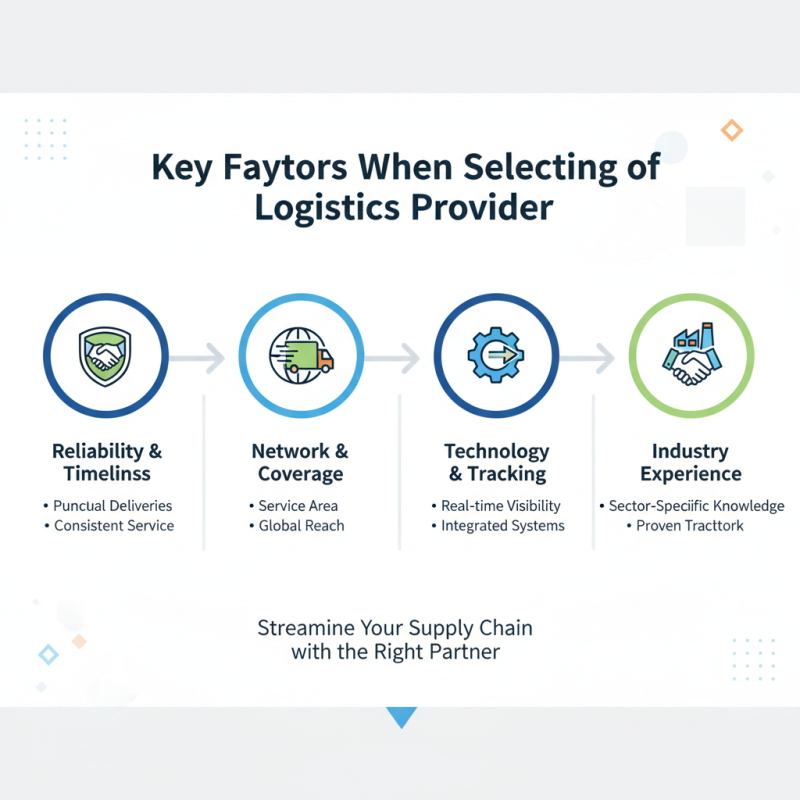
Choosing the right logistics provider is crucial for any business aiming to streamline its supply chain. A dependable logistics partner ensures timely deliveries and maintains inventory levels. When evaluating candidates, consider their industry experience. Providers with a solid background in your sector understand specific challenges and needs.
Look for a logistics provider with proven expertise. Ask about their transportation methods, warehousing capabilities, and technology use. Reliable companies utilize advanced tracking systems, which enhance visibility. This feature helps you stay informed about shipment status, reducing anxiety around deliveries.
Cost is an essential factor. However, the cheapest option isn’t always the best. A low price might mean lower service quality. Analyze the value offered, not just the cost. Also, assess their customer service. Responsive support can make a significant difference during unforeseen challenges. Finding the perfect match may take time and effort, but the right provider can elevate your business operations.
The Impact of Logistics on Supply Chain Efficiency and Cost Savings
Choosing the right logistics provider is crucial. Logistics directly impacts your supply chain's efficiency and your overall costs. An efficient logistics system can reduce lead times and optimize inventory management. This translates to cost savings and improved customer satisfaction. Slow shipments and mishandled goods can lead to unhappy customers.
Tips: Look for providers who use technology for tracking. This improves visibility and reduces errors in order fulfillment. Regularly review your logistics strategy to determine if it meets your evolving needs.
The cost of logistics can sometimes be overlooked. Hidden fees and inefficient routes may creep into your budget. Understand the complete pricing structure before committing to a provider. Evaluate their performance regularly to ensure you are getting value for your investment. Communication is key. A good provider should maintain open lines for updates and support.
Why Choose the Right Logistic Provider for Your Business?
| Logistic Provider Type |
Supply Chain Efficiency Impact (%) |
Cost Savings (%) |
Average Delivery Time (days) |
Customer Satisfaction Score (1-10) |
| Third-Party Logistics (3PL) |
20 |
15 |
5 |
8 |
| Freight Forwarders |
25 |
18 |
7 |
7 |
| In-House Logistics |
30 |
10 |
3 |
9 |
| Drop Shipping |
15 |
12 |
10 |
6 |
| E-commerce Fulfillment Centers |
35 |
20 |
4 |
8 |
Common Challenges Faced When Choosing Logistics Providers
Choosing the right logistics provider is critical for any business. However, many face common challenges in this process. One major challenge is identifying specific needs. Every business has unique requirements; understanding them is essential. For instance, companies need to consider shipment volume, delivery speed, and geographic reach. Struggling to evaluate these needs can lead to costly mistakes.
Another challenge is the lack of transparency in pricing. Some logistics providers may offer low initial rates, but hidden fees can inflate costs later. Businesses often find themselves surprised by extra charges. This makes it crucial to read the fine print and ask questions upfront. Without thorough research, companies risk overpaying.
Finally, communication issues frequently arise. A logistics provider's responsiveness can significantly impact operations. Delays in communication can lead to misunderstandings, affecting delivery times. Companies must ensure that logistics partners value clear and prompt communication. When these challenges are not addressed, they can hinder business growth. Reflection on these points is vital for making informed decisions.
Evaluating Logistics Provider Performance and Service Quality
Choosing the right logistics provider is crucial for business success. Evaluating logistics provider performance and service quality is key. According to industry reports, nearly 40% of companies have experienced delays due to poor logistics. This impacts customer satisfaction significantly. Companies face challenges in delivery reliability, which can lead to lost revenue.
Performance metrics, such as on-time delivery rates, reflect a provider’s efficiency. A report by the Logistics Management Association shows that providers with an on-time delivery rate below 85% often struggle to retain customers. Businesses should consider these statistics when selecting a provider. Asking for performance reviews may reveal insights into a provider's reliability.
Service quality is equally important. The Customer Satisfaction Index revealed that 68% of customers rate logistics service quality as a major factor in repeat business. Poor communication and lack of transparency can damage relationships. Regular feedback from customers can help logistics providers improve. Many firms often overlook this aspect, leading to unresolved issues that hurt their reputation and bottom line.
Addressing these challenges can enhance overall performance in logistics, ensuring companies remain competitive.