China Best Third Party Logistics Companies?

China’s manufacturing scale has made logistics capability a strategic business concern. Choosing among China’s best Third Party Logistics companies requires more than comparing warehouse prices or delivery promises. It requires evidence.

The 2024 Third-Party Logistics Study by NTT DATA, Penn State, and Penske reports that most shippers view 3PLs as important partners for improving logistics effectiveness and customer service. The report also highlights technology integration, data visibility, and collaboration as continuing priorities. These findings matter in China, where suppliers may manage factory pickup, bonded warehousing, cross-border transportation, customs coordination, and final-mile delivery through one operating network.

Scale alone is not enough.

A provider may operate hundreds of facilities yet struggle with inventory accuracy or exception handling. Another may offer fewer locations but provide better control, clearer reporting, and stronger sector experience. Armstrong & Associates’ global 3PL research also shows the market’s growing emphasis on integrated logistics, contract services, and technology-enabled operations. However, market data can hide regional differences. Shanghai, Shenzhen, Chengdu, and inland manufacturing clusters do not present identical logistics conditions.

This guide examines leading Chinese providers through practical criteria: network coverage, transport assets, warehouse capability, digital systems, industry expertise, service reliability, and international coordination. It also considers public company information, recognized industry studies, and customer-facing evidence where available. No ranking is universally correct. That is worth remembering. Company size, cost, and brand reputation cannot replace a careful fit assessment. Businesses should verify licenses, insurance, service-level terms, data practices, and operational references before making a final decision.

China Best Third Party Logistics Companies?

Definition and Role of Third-Party Logistics Companies in China

Third-party logistics companies in China manage logistics activities for manufacturers, retailers, and cross-border sellers. They may arrange warehousing, transport, customs documentation, inventory control, and order fulfillment. The client owns the goods. The 3PL coordinates the movement.

China’s logistics network is vast and increasingly data-driven. The China Federation of Logistics and Purchasing reported total social logistics value of about RMB 360.6 trillion in 2024. It also reported a logistics-cost-to-GDP ratio of 14.1%. These figures show why outsourcing can matter. A capable 3PL can combine trucks, warehouses, rail links, ports, and digital tracking. It can reduce empty capacity and improve delivery visibility.

The best provider is not always the largest one. Service fit matters more. A manufacturer may need temperature control, production-line delivery, and accurate stock records. An online seller may value fast picking, returns handling, and flexible storage.

Reports from the China Logistics Information Center also show continuing investment in intelligent logistics and supply-chain technology. Yet technology alone cannot repair weak communication. That is easy to overlook. Human judgment still matters when weather, traffic, or demand changes suddenly.

Service-level records, loss rates, delivery accuracy, insurance terms, and data security deserve careful review. No provider performs perfectly. A practical evaluation should test real operating conditions, not only polished presentations.

Key Services Offered by China’s 3PL Providers

China Best Third Party Logistics Companies?

China’s 3PL providers support more than transport. They coordinate warehousing, order processing, freight booking, customs documents, and final delivery. A capable partner can receive cartons in Shenzhen, record quantities, and prepare pallets for export within hours. This practical coordination reduces handling errors and improves shipment visibility.

Warehousing is a core service. Providers may offer barcode scanning, inventory counts, labeling, packaging, and climate-controlled storage. Some also manage quality checks before goods leave the facility. These checks can identify damaged boxes, missing accessories, or incorrect product codes. Small mistakes matter.

Freight management covers ocean, air, rail, and domestic trucking options. A professional provider compares transit time, capacity, insurance conditions, and documentation requirements. Clear tracking should show when cargo is collected, loaded, cleared, and delivered. Reverse logistics may handle returns and inspection, although service quality varies between warehouses. No provider performs every task equally well. A low quotation can exclude storage, relabeling, or destination charges. Buyers should review service-level terms, response times, reporting methods, and escalation procedures before signing. Independent audits and recent performance records offer stronger evidence than polished sales claims.

How to Evaluate and Compare Chinese 3PL Companies

China Best Third Party Logistics Companies?

Choosing a Chinese 3PL requires more than comparing freight quotes. Start with your product, delivery regions, and required storage conditions. Ask for proof of relevant operating licenses, insurance coverage, and documented compliance procedures. A reliable provider should explain its warehouse controls clearly. During a site visit, inspect barcode scanning, loading areas, fire systems, and inventory records. Look for clean aisles and labeled cartons.

Compare measurable performance. Request the last six months of on-time shipping, order accuracy, inventory variance, and damage data. Define each KPI in the service agreement. A low handling fee can hide storage surcharges, relabeling costs, or weak claims support. Ask how quickly staff respond to urgent order changes. Test the process with a small shipment before making a long commitment. Real evidence matters.

Technology also deserves careful review. Check whether the warehouse system connects with your sales platform and provides live stock updates. Ask who can access shipment data and how backups are managed. Speak with two current customers, not only selected references. Their comments may reveal delays during holidays or peak seasons. No scorecard is perfect. I would give communication a higher weight than polished presentations, because small errors can grow quickly across hundreds of orders. A practical review should include monthly meetings, written corrective actions, and a clear exit process.

China Best Third Party Logistics Companies? - How to Evaluate and Compare Chinese 3PL Companies

Anonymized 3PL comparison matrix for supplier screening, tender evaluation, and contract negotiations

Evaluation Dimension What to Verify Recommended Evaluation Standard Provider A
Score
Provider B
Score
Provider C
Score
Provider D
Score
Provider E
Score
China Domestic Coverage Owned or controlled facilities, delivery lanes, regional distribution capability, and service coverage in major manufacturing and consumer markets. Coverage of the required provinces and major logistics corridors, supported by documented shipment records. 5.0 4.0 4.5 3.5 3.0
International Freight Capability Ocean, air, rail, and cross-border trucking options; carrier relationships; shipment consolidation; and trade-lane experience. At least two viable routing options for critical lanes and documented contingency plans for peak periods. 4.0 5.0 4.5 3.0 2.5
Warehouse Network Warehouse locations, usable capacity, temperature-control capability, inventory handling processes, and peak-season expansion capacity. Capacity and locations must match forecast volume; backup capacity should be available for disruption or seasonal demand. 5.0 4.0 4.5 3.5 3.0
WMS and IT Integration WMS, TMS, API, EDI, barcode scanning, inventory visibility, order-status alerts, and integration testing procedures. Real-time or near-real-time inventory updates, documented API/EDI capability, and defined system service levels. 5.0 4.0 3.5 3.0 2.5
Customs and Trade Compliance Customs brokerage authorization, export documentation controls, HS classification support, duty management, and audit records. Documented compliance procedures, low exception rates, trained specialists, and clear responsibility for customs errors. 4.5 5.0 4.0 3.5 3.0
On-Time Delivery Performance Last 12 months of lane-level OTIF or on-time delivery results, measurement method, exclusions, and customer references. Target at least 95% for stable domestic lanes; require corrective-action plans for performance below target. 97% 95% 96% 92% 90%
Order and Inventory Accuracy Pick accuracy, cycle-count results, stock adjustment records, returns handling, and reconciliation processes. Pick accuracy of at least 99.5% and documented inventory reconciliation at agreed intervals. 99.8% 99.6% 99.7% 99.2% 98.9%
Scalability and Peak Readiness Labor pool, temporary storage, transportation capacity, peak-season planning, and historical response to demand surges. Ability to absorb forecast peaks without material deterioration in service levels or excessive spot-market dependence. 5.0 4.0 4.5 3.5 2.5
Value-Added Services Kitting, labeling, postponement, quality inspection, light assembly, repacking, reverse logistics, and product customization. Services should be performed under documented work instructions with measurable quality and turnaround-time targets. 5.0 3.5 4.0 3.0 2.0
Pricing Transparency Rate cards, fuel and accessorial charges, storage rules, minimum volumes, customs fees, claims costs, and annual price-adjustment clauses. A complete landed-cost model with clearly defined inclusions, exclusions, assumptions, and rate validity period. 4.0 3.5 4.5 3.0 2.5
Claims and Risk Management Cargo insurance, liability limits, claims procedure, incident response, business continuity, disaster recovery, and subcontractor controls. Written risk allocation, response deadlines, adequate insurance, and tested continuity procedures for major disruptions. 4.5 5.0 4.0 3.0 2.5
Sustainability and Compliance Environmental permits, energy and emissions data, packaging reduction, labor compliance, safety records, and supplier-audit readiness. Evidence-based sustainability reporting and compliance controls aligned with the customer’s procurement requirements. 4.0 4.5 4.0 3.0 2.5
Customer Service and Governance Named account team, escalation matrix, reporting frequency, review meetings, issue-resolution process, and multilingual support. Single accountable owner, defined escalation times, regular KPI reviews, and documented continuous-improvement actions. 5.0 4.0 4.5 3.5 3.0
Total Weighted Score Apply weights based on the shipment profile, product characteristics, risk tolerance, and service requirements. Use a 100-point model; do not select on price alone. Require minimum thresholds for compliance, service, and system capability. 91/100 88/100 87/100 70/100 59/100

Scoring note: Scores use a five-point scale: 5 = excellent, 4 = strong, 3 = standard, 2 = limited, and 1 = inadequate. Percentage figures should be validated against recent lane-level operating reports, signed service-level agreements, customer references, and an on-site or virtual operational audit before contract award.

Leading Categories of China’s Third-Party Logistics Providers

China Best Third-Party Logistics Companies? Leading Categories of China’s Third-Party Logistics Providers

China’s third-party logistics market is broad, not one uniform service. The China Federation of Logistics and Purchasing reported total social logistics value of 360.6 trillion yuan in 2024. This scale supports several specialized provider categories. Contract logistics operators manage warehousing, inventory, packaging, and domestic distribution. Their value appears in practical details, such as barcode accuracy, dock scheduling, and same-day stock updates.

Freight-forwarding providers coordinate ocean, air, rail, and road movements. They suit importers handling multiple suppliers or inland destinations. Multimodal operators can reduce handoffs, although service visibility may weaken between transport modes.

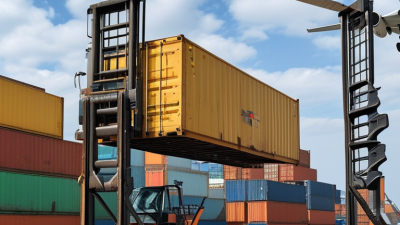
The Ministry of Transport reported China’s container throughput exceeded 330 million TEUs in 2024. That figure reflects enormous shipping activity, but it does not guarantee consistent third-party performance.

E-commerce fulfillment providers focus on fast picking, returns, and parcel sorting. Cold-chain specialists serve food, pharmaceuticals, and temperature-sensitive goods with insulated storage and continuous monitoring. Industry reports from the China Federation of Logistics and Purchasing show continuing expansion in cold-chain infrastructure and logistics demand. However, category labels can mislead buyers. A provider may offer refrigerated transport but lack reliable regional warehouses. Strong evaluation should examine delivery records, claims handling, warehouse audits, digital tracking, and contingency planning. Cheap rates can hide manual work and slower exception response.

Industry Trends Shaping China’s 3PL Market

China’s 3PL market is being reshaped by digital visibility, automation, and more demanding manufacturing networks. The China Federation of Logistics and Purchasing reported total social logistics value of 352.4 trillion yuan in 2023, up 5.2% year on year. This scale creates room for specialized providers, not only large nationwide operators.

The shift is measurable. The China E-commerce Logistics Index has repeatedly shown strong demand for faster, more predictable deliveries. In practice, clients now expect shipment tracking, electronic proof of delivery, and exception alerts before a delay becomes expensive. Automated storage and route optimization are also spreading across industrial hubs. However, technology alone does not guarantee better service. A dashboard may display every parcel while hiding poor inventory accuracy.

Green logistics is another strong market force. The China Federation of Logistics and Purchasing has highlighted continued investment in energy efficiency, multimodal transport, and recyclable packaging. Warehouses with LED lighting, electric handling equipment, and consolidated truck routes can reduce operating waste. Yet smaller contractors may lack reliable emissions data. That weakness deserves attention. The most capable 3PL partners will combine local labor knowledge with secure data systems, flexible warehousing, and measurable service-level performance. Experience still matters when a factory faces a missed loading window, a sudden order surge, or a damaged pallet. Growth forecasts are useful, but they cannot replace site audits, customer references, and transparent cost records.