What Are the Best China Railway Freight Services?

Choosing the best China Railway Freight service depends on cargo type, destination, urgency, and customs requirements. A low price alone can hide storage fees, border delays, or limited tracking visibility. In practice, exporters compare route stability, departure frequency, terminal coverage, wagon capacity, insurance, and final-mile delivery. The details matter.

China State Railway Group reported that national railway freight volume reached about 3.91 billion tonnes in 2023. This figure shows the scale behind China’s rail logistics network. Its international services are also expanding. According to the group’s 2023 data, China-Europe Railway Express operations reached 17,000 train trips and carried approximately 1.9 million twenty-foot equivalent units. These figures suggest strong network activity, but they do not automatically prove that every corridor suits every shipper.

The World Bank’s Logistics Performance Index 2023 highlights customs efficiency, infrastructure quality, shipment timeliness, and tracking as core logistics measures. These standards are useful when evaluating Railway Freight providers beyond advertised transit times. A dependable service should provide clear booking procedures, realistic schedules, cargo monitoring, and documented handover points. Temperature-sensitive goods need different controls from machinery, textiles, or automotive parts.

No single service wins everywhere. Route geography changes the answer. A direct block train may reduce handling, while a multimodal option may offer better destination coverage. Transit times can also shift during peak seasons, border inspections, or infrastructure maintenance. That is easy to overlook.

This guide compares leading China railway corridors through operational reliability, pricing transparency, coverage, tracking quality, and compliance practices. It uses published industry data, while recognizing an important limitation: public statistics often describe network totals, not each provider’s daily performance. Real quotations and service records still deserve careful review.

What Are the Best China Railway Freight Services?

What Is China Railway Freight and How Does It Work?

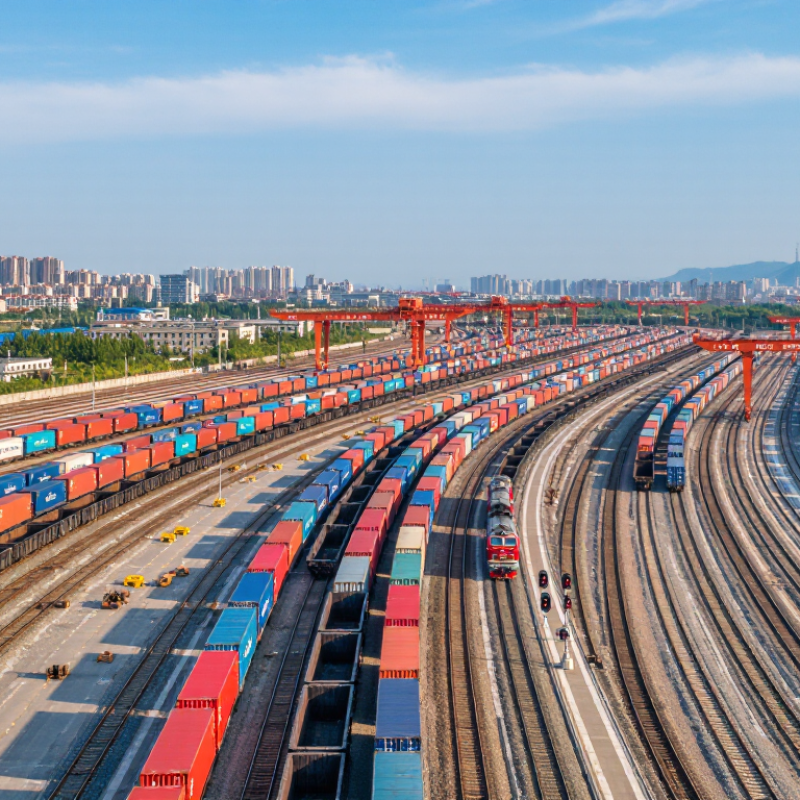
China railway freight is a scheduled cargo service linking factories, inland terminals, border hubs, and European distribution centers. Trains carry containers on fixed corridors, then transfer them between rail gauges when required. Customs checks, security screening, and electronic documents happen at several points. The process is slower than air freight, but usually faster than ocean shipping.

Industry data shows why this mode matters. According to the International Union of Railways, rail freight generally produces far fewer emissions than road transport per tonne-kilometer. China’s national railway statistics also reported more than 3.3 billion tonnes of freight moved by rail in 2023. Cross-border services recorded strong growth, although transit times can change because of border congestion, seasonal demand, and equipment shortages. The World Bank’s Logistics Performance Index highlights reliable infrastructure and customs efficiency as major logistics factors. Rail cannot solve every supply-chain problem.

Tips: Choose cargo with stable delivery schedules and moderate urgency. Confirm container dimensions, cargo weight, customs documents, and border procedures before booking. Request a route plan with estimated terminal dwell time. In my experience, the advertised journey time is not always the final delivery time. A local trucking delay can erase rail’s advantage. Build a small buffer. Also compare total landed cost, including terminal handling, customs brokerage, insurance, and final-mile delivery. Reported emissions vary by route, electricity mix, train utilization, and return loads, so treat environmental claims carefully.

What Types of Goods Can China Railway Freight Transport?

China railway freight can transport far more than containers of electronics. In shipment planning, common cargo includes machinery, auto components, textiles, furniture, packaged food, and household appliances. These goods suit rail because they need steadier transit than trucking and lower cost than airfreight. Cargo usually travels in standard containers with sealed loading, scan records, and transfer checks at inland terminals. Small detail, big consequence. Poor pallets can cause damage before the train leaves.

China’s national railway authority recorded 17,523 China-Europe freight train journeys and about 1.9 million TEUs in 2023. That scale shows rail is no longer limited to test shipments. Customs trade data also identifies mechanical and electrical products as major traded categories. Many fit containerized rail transport. UNCTAD’s Review of Maritime Transport 2023 states that over 80% of global merchandise trade by volume moves by sea. Rail works best as a middle option: faster than ocean freight, but less expensive than airfreight. It is not automatically better.

Temperature-sensitive goods may move in refrigerated containers, but power supply and border procedures need confirmation. High-value electronics require moisture control, shock protection, and suitable insurance. Food shipments need accurate labels, sanitation records, and destination-country approval. I would not promise fixed transit times without checking seasons and border congestion. That matters. A reliable quotation should state the commodity, weight, dimensions, packaging, customs status, delivery terms, and final-mile address. This approach matches the railway service to the goods, instead of forcing the goods to match the timetable.

What Are the Best China Railway Freight Services? – What Types of Goods Can China Railway Freight Transport?
Rail Freight Service Type Typical Route or Operating Pattern Typical Transit Time Best-Suited Goods Main Advantages Important Considerations
China Railway Freight Service Comparison
International China–Europe Block Train Dedicated or scheduled container trains linking inland Chinese terminals with European rail terminals through Central Asian and Eastern European rail corridors. Approximately 12–20 days, depending on origin, destination, border procedures, train schedule, and transshipment requirements. Machinery Electronics Automotive parts Consumer goods Usually faster than ocean freight and generally less expensive than air freight for suitable cargo. Provides scheduled departures and lower emissions than air transport. Transit times can change because of border gauge changes, customs inspections, network congestion, seasonal demand, and geopolitical conditions.
China–Central Asia Rail Freight Containerized rail services between Chinese inland terminals and destinations in Central Asia, often using border interchange facilities. Approximately 5–12 days, depending on the city pair and border processing. Building materials Industrial equipment Textiles Food products Efficient for landlocked destinations and suitable for regular containerized shipments over medium distances. Some corridors use different railway gauges, so containers or cargo may require transfer or specialized handling at border points.
Rail–Sea Intermodal Freight Rail transport connects factories or inland terminals with a seaport, followed by ocean transport to the final overseas destination. Approximately 25–45 days for many long-distance international movements, depending on the ocean leg and port schedule. Bulk packaged goods Retail inventory Raw materials Standard containers Combines the inland reach of rail with the broad global coverage and lower unit cost of ocean shipping. Requires coordination among rail operators, ports, ocean carriers, customs agents, and inland delivery providers.
Domestic China Rail Freight Container, wagonload, or dedicated train services between production regions, logistics hubs, ports, and distribution centers within China. Approximately 1–7 days for many domestic corridors, depending on distance and service frequency. Steel products Coal and minerals Vehicles Agricultural products High capacity for long inland distances and effective access to major industrial and distribution centers. Door-to-door delivery normally requires first-mile and last-mile trucking, loading equipment, and local warehouse coordination.
Temperature-Controlled Rail Freight Refrigerated or insulated containers and railcars used on routes where temperature monitoring and controlled handling are available. Route-dependent; often similar to the underlying rail service but may require additional handling time. Fresh produce Frozen food Pharmaceutical products Chemicals requiring temperature control Can maintain a defined temperature range during transport and reduce reliance on long-distance air freight for some products. Requires validated packaging, continuous temperature monitoring, power availability, defined handling procedures, and regulatory compliance.
Special Equipment and Project Rail Freight Flatcars, open-top equipment, heavy-duty wagons, or other approved rail equipment for oversized or high-weight cargo. Approximately 10–30 days for international movements, depending on route approvals and handling arrangements. Heavy machinery Generators Construction equipment Industrial components Suitable for cargo that cannot be efficiently shipped in standard dry containers. Requires advance review of dimensions, axle weight, loading method, route clearance, lifting equipment, and permits.
Goods Commonly Transported by China Railway Freight
Goods Category Examples Recommended Equipment Typical Handling Requirements Key Suitability Factors Restrictions or Risks
General Manufactured Goods Furniture, appliances, clothing, household products, tools, and packaged consumer goods. Standard dry container or boxcar. Export-grade packaging, palletization where appropriate, weight distribution, and moisture protection. Best for non-perishable cargo with stable packaging and predictable dimensions. Fragile goods may require shock protection and careful transshipment procedures.
Electronics and High-Value Cargo Electronic components, computers, communication equipment, and precision instruments. Standard container with enhanced security procedures; specialized packaging when required. Inventory control, tamper-evident seals, shock and moisture protection, and documented handovers. Rail can provide a useful balance between transit speed, cost, and security for many high-value shipments. Some batteries, wireless devices, and equipment may be subject to dangerous-goods or import regulations.
Automotive Cargo Vehicle parts, tires, engines, assembled vehicles, and production-line components. Dry container, specialized vehicle carrier, or dedicated rail wagon. Secure blocking and bracing, protection from weather, accurate part documentation, and schedule coordination. Suitable for recurring volumes and time-sensitive manufacturing supply chains. Oversized vehicles and components require route, clearance, and loading assessments.
Metals, Minerals, and Industrial Materials Steel coils, aluminum, copper, cement, ores, and other industrial inputs. Open-top wagon, flatcar, bulk wagon, or reinforced container, according to cargo properties. Weight control, corrosion protection, securement, dust management, and suitable loading machinery. Rail is efficient for heavy, dense, and regular-volume shipments over long inland distances. Axle-load limits, loading-gauge restrictions, and specialized unloading requirements may apply.
Agricultural and Food Products Grain, fruit, vegetables, meat, processed food, beverages, and animal feed. Dry container, reefer container, insulated equipment, or bulk wagon. Food-grade packaging, hygiene controls, temperature management when required, and health certificates. Suitable when shelf life allows the planned rail transit time and border clearance process. Perishable goods may face delays from inspections, temperature deviations, or documentary problems.
Chemicals and Regulated Materials Paints, solvents, industrial chemicals, batteries, fertilizers, and other regulated substances. Approved tank container, specialized tank wagon, or compliant dry container. Correct classification, packaging, labels, safety data sheets, emergency information, and trained handling. Rail can transport many regulated materials when the route, equipment, and documentation are approved. Acceptance is subject to dangerous-goods rules, route restrictions, quantity limits, and border-country regulations. Not every substance is permitted on every service.
Oversized and Heavy Project Cargo Transformers, turbines, excavators, generators, factory modules, and construction machinery. Flatcar, depressed-center wagon, heavy-duty wagon, or other approved special equipment. Engineering survey, lifting plan, route clearance, center-of-gravity review, blocking and lashing plan, and permits. Rail is practical when cargo dimensions and weight remain within the approved infrastructure limits. Longer planning lead times are common because route approval and specialized handling are required.
Temperature-Sensitive and Pharmaceutical Products Vaccines, medicines, laboratory materials, biologics, and temperature-sensitive ingredients. Validated temperature-controlled container or reefer equipment. Qualified packaging, temperature mapping, data logging, contingency procedures, and controlled handovers. Most suitable for products with a validated temperature range and sufficient shelf life for rail transit. Regulatory requirements, customs delays, power interruptions, and temperature excursions must be managed in advance.

Which China Railway Freight Routes and Services Are Available?

China railway freight services cover several practical corridors. Trains move from eastern manufacturing hubs toward Central Asia and Europe. Southern routes connect China with Southeast Asian markets through rail and road transfers. China–Laos services support regional distribution, while border connections provide access to neighboring countries. Available options include full-container loads, less-than-container loads, scheduled block trains, and multimodal rail-sea transport.

Service selection depends on cargo volume, destination, and delivery urgency. Full-container shipping usually offers simpler handling and better cargo control. Consolidated freight can suit smaller shipments, but it may involve extra warehouse transfers. Common support services include export documentation, customs coordination, terminal handling, cargo insurance arrangements, and shipment tracking. Temperature-controlled equipment exists on selected routes, although availability can be limited. Plan early.

A reliable booking review should examine departure frequency, border procedures, terminal capacity, and final-mile delivery. Transit times can change because of weather, congestion, inspections, and gauge changes at international borders. Rail is often faster than ocean freight and less costly than air freight, but it is not perfectly predictable. One practical mistake is comparing only the line-haul price. Storage, transfer, customs, and local delivery charges may alter the final cost. Shippers should also confirm packaging standards, accurate commodity descriptions, and lawful documentation before loading. Some route information looks clear online, yet actual schedules may require direct operational verification.

How Do China Railway Freight Costs, Transit Times, and Tracking Compare?

China railway freight offers a practical middle ground between ocean and air transport. For many China-Europe routes, transit commonly takes about 15 to 25 days. Actual timing depends on border procedures, terminal capacity, and final-mile delivery. It is faster than ocean freight but usually cheaper than air freight. Not always the cheapest.

A reliable cost comparison should include pickup, rail handling, customs documentation, storage, insurance, and delivery charges. A low initial quote can become expensive when these items appear later. Shippers should request a validity period because fuel prices and seasonal capacity can change rates quickly. Consolidated cargo may reduce costs, although it can add handling time and damage exposure.

Tracking is usually more detailed than basic ocean updates. Common milestones include container pickup, terminal acceptance, departure, border transfer, and arrival. Some systems provide location updates, while others only record key events. That difference matters. A tracking page may show no movement for several days during customs or border inspections, even when the shipment is progressing. Reliable operators should explain these gaps and provide supporting documents when delays occur. In practice, rail freight is predictable, but not perfectly punctual. Weather, congestion, and paperwork errors can still shift delivery dates. Companies should compare the full landed cost and delivery reliability, not just the advertised rail rate.

How Should Businesses Choose the Best China Railway Freight Service?

Choosing the best China railway freight service starts with the cargo, not the advertised price. A reliable provider should explain the route, border procedures, handling points, and expected transit range. Ask for evidence. Request recent performance data, not only a polished timetable.

Compare services by schedule stability, tracking quality, customs support, and final-mile delivery options. A shipment may leave on time yet lose days during transfer or clearance. Check whether the provider handles your cargo type and prepares accurate commercial documents. Details matter. Confirm weight limits, packaging standards, liability terms, and procedures for delays or damaged cartons.

Price deserves careful review. A low quote may exclude terminal fees, storage, inspections, or inland transport. Ask for a written cost breakdown with currency, payment terms, and possible surcharges. Build in slack. Railway freight can be faster than ocean transport, but it is not immune to weather, congestion, or border changes. A sensible trial shipment can reveal weak communication before larger volumes move. Track one pallet closely: note pickup time, handover updates, document requests, and delivery condition. This record helps compare providers fairly, although it may expose flaws in your own packaging or planning. That is useful, even when inconvenient.

What Are the Best China Railway Freight Services?

How Should Businesses Choose the Best China Railway Freight Service?

China railway freight is often the best balance between speed, cost, and emissions for shipments that are too urgent for sea freight but too large or expensive for air freight. Businesses should compare the complete door-to-door schedule, customs requirements, cargo type, route coverage, tracking capability, and service frequency before choosing a provider.

The chart shows commonly reported planning ranges for China–Europe freight: air freight approximately 3–5 days, railway freight approximately 12–18 days, and sea freight approximately 30–45 days. Actual transit time varies by origin, destination, border procedures, consolidation, weather, and operating conditions. Reference context: European Commission transport statistics, UNCTAD Review of Maritime Transport, and IATA air-cargo guidance.