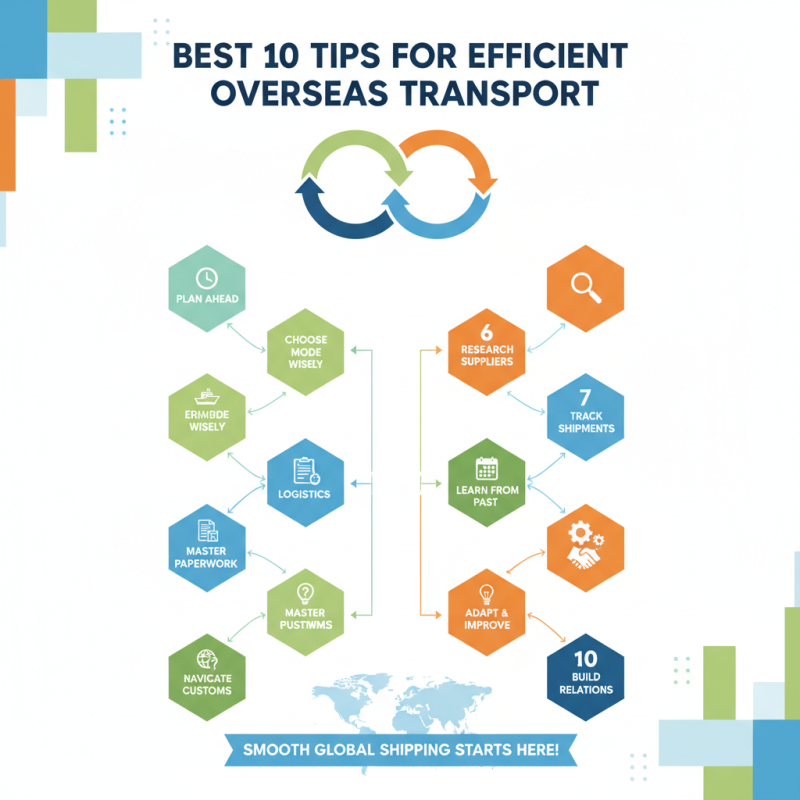
Best 10 Tips for Efficient Overseas Transport?
Efficient overseas transport is crucial for businesses and individuals. It ensures products reach global markets on time. However, many encounter challenges. Poor planning can hinder timelines and increase costs.
Choosing the right transportation method matters greatly. Air freight is faster but often more expensive. Sea freight is cost-effective but may take longer. Understanding the logistics can be overwhelming.
Details, such as customs regulations and paperwork, play a significant role. Mistakes can lead to delays and extra fees. Reflecting on past experiences can help improve future transport strategies. Adapting and learning is key to mastering overseas transport.
Understanding the Basics of Overseas Transport Logistics
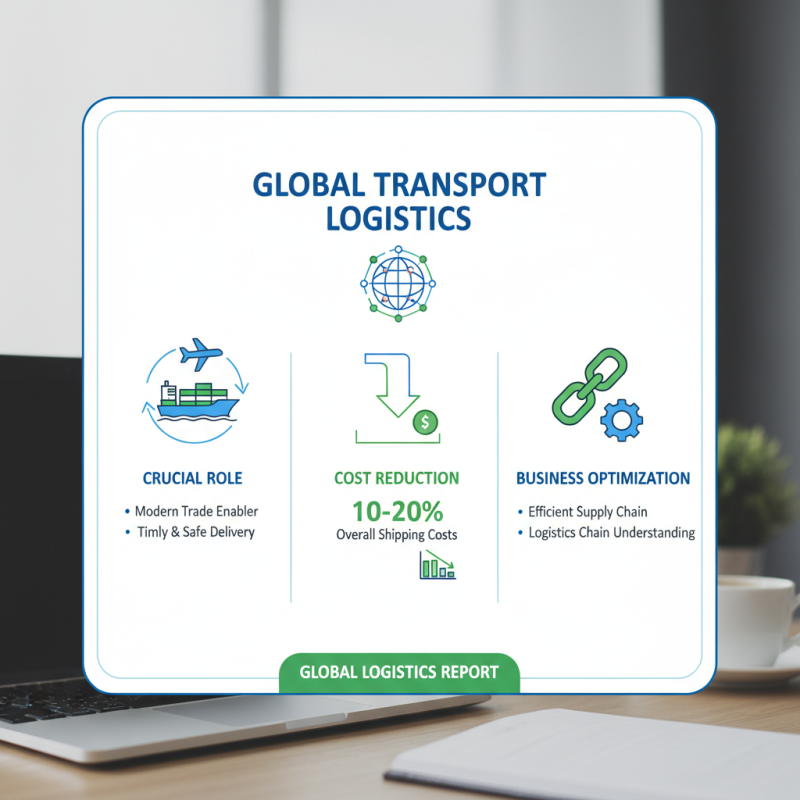
Overseas transport logistics plays a crucial role in modern trade. Efficient logistics ensure goods arrive on time and in good condition. According to the Global Logistics Report, efficient transport can reduce overall shipping costs by 10-20%. Understanding the logistics chain is essential for businesses aiming to optimize their supply chain.
Many factors influence overseas transport. The choice of shipping methods can impact delivery times. Sea freight is cost-effective but slower. Air freight is faster but often more expensive. Companies should analyze their needs and customer expectations. A misjudgment here can lead to dissatisfied customers. Additionally, regulatory requirements vary by region, requiring companies to stay informed. Ignoring these regulations can result in costly delays and fines.
Data shows that communication gaps often hinder logistics efficiency. A survey indicated that over 40% of shipping delays stem from poor communication among stakeholders. Investing in better communication tools can bridge these gaps. Yet, some organizations still overlook this crucial aspect. The failure to adapt to changing logistics technologies remains another concern. Companies must actively seek ways to improve efficiency in this competitive market. Balancing cost, time, and compliance will lead to a more effective overseas transport strategy.
Choosing the Right Mode of Transport for Your Needs
When planning overseas transport, choosing the right mode is crucial. Different methods cater to distinct needs. Sea freight is ideal for heavy cargo. It is cost-effective but slow. Air freight, on the other hand, is fast but can be expensive. For fragile items, air is safer, despite the higher cost.
Consider the urgency of your shipment. If timing is critical, air transport might be your best option. However, if you can afford some delay, sea freight is worth considering. It's essential not to overlook the volume of goods. Large shipments can benefit from bulk shipping discounts. Mixed cargoes complicate logistics; clarity in needs is vital.
Reflecting on past experiences can provide insights. Did any mode exceed expectations? Or was there a transportation hiccup that caused delays? Understanding these aspects can guide future decisions. Ultimately, aligning your mode of transport with your specific needs will lead to a smoother overseas experience.
Best 10 Tips for Efficient Overseas Transport
This chart illustrates the efficiency of different modes of transport based on average delivery time (in days) and cost (in USD). The goal is to help you choose the right mode of transport for your needs.
Effective Packing Strategies for International Shipping
Packing efficiently for international shipping can make a significant difference in cost and safety. According to recent industry reports, more than 30% of goods get damaged during transit due to improper packing. Choosing the right materials is crucial. Use sturdy boxes that can withstand the rigors of travel. Ensure all items are cushioned with bubble wrap or foam. Minimal empty space can prevent shifting, which leads to damage.
Pay attention to weight distribution. Items should be arranged so that heavier pieces are at the bottom. This method allows for better stability while in transit. Interestingly, the shipping industry reports that over 20% of packages are returned or delayed due to improper labeling or documentation. Clear labels with addresses and contents, as well as customs forms, can streamline the process.
Consider the climate conditions of the destination. Humidity and temperature can affect certain items. Utilize moisture-absorbing packets to protect delicate products. Reflecting on packing choices can save headaches later. Are those extra items truly necessary? Packing smart can also save costs, as shipping fees often depend on weight and dimensions. Efficient packaging isn’t just practical; it’s essential for successful international transport.
Best 10 Tips for Efficient Overseas Transport - Effective Packing Strategies for International Shipping
| Tip Number |
Packing Strategy |
Description |
Estimated Cost ($) |
| 1 |
Use Quality Packing Materials |
Invest in strong boxes and packing materials to ensure the safety of goods. |
150 |
| 2 |
Label Packages Clearly |
Clearly mark each package with contents, destination, and handling instructions. |
20 |
| 3 |
Utilize Space Efficiently |
Pack items tightly to optimize space and reduce shipping costs. |
0 |
| 4 |
Consider Dimensional Weight |
Factor in dimensions of packages to avoid unexpected charges. |
0 |
| 5 |
Use Cushioning Materials |
Include bubble wrap or foam to protect fragile items. |
50 |
| 6 |
Plan for Customs Requirements |
Research required documentation to avoid delays. |
30 |
| 7 |
Group Items Together |
Combine similar items to streamline packing and unpacking. |
0 |
| 8 |
Maintain an Inventory |
Keep a detailed list of all items being shipped. |
10 |
| 9 |
Research Shipping Options |
Evaluate various carriers for the best rates and service. |
0 |
| 10 |
Choose Right Time for Shipping |
Select off-peak times to reduce costs and delays. |
0 |
Navigating Customs Regulations and Documentation Requirements
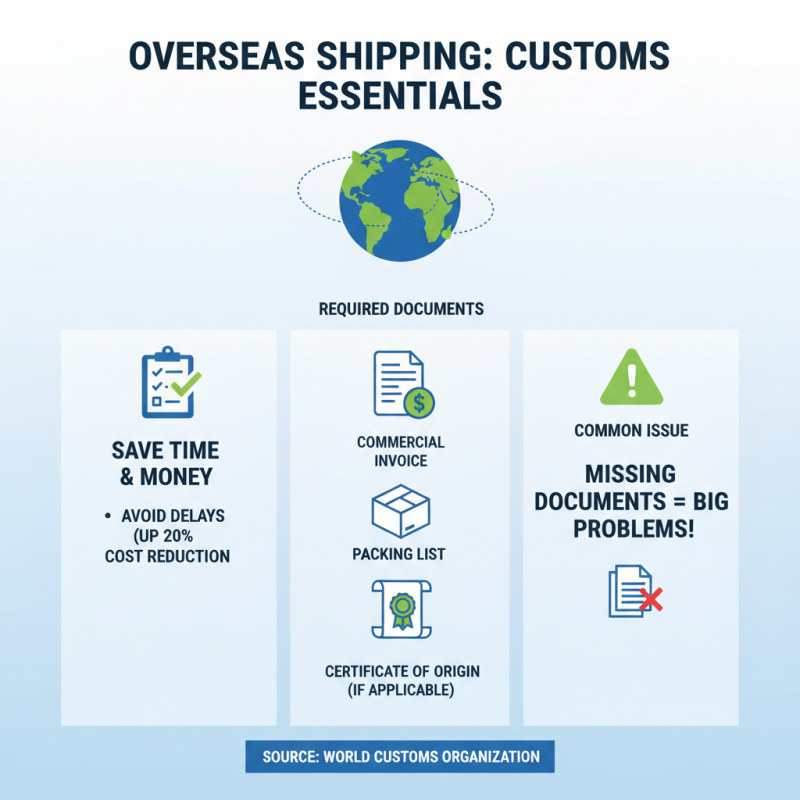
Navigating customs regulations is essential for efficient overseas transport. According to a report by the World Customs Organization, delays caused by improper documentation can increase shipping costs by up to 20%. Knowing what documents are required can save time and money. Typically, you will need a commercial invoice, packing list, and possibly a certificate of origin. Missing even one document can create significant problems.
Customs regulations differ widely across countries. For example, some nations require specific labeling or additional permits for certain products. This varies based on the product category and destination. The International Trade Centre suggests that understanding these nuances is crucial for smooth shipping. Not everyone takes the time to research these regulations, leading to unexpected holdups.
Improper classification of goods can be another pitfall. According to a study by Deloitte, around 30% of shipments are misclassified, which results in fines and delays. Details matter here; two similar items may have vastly different duty rates. Therefore, it’s critical to invest time in learning about these requirements prior to shipment. Small mistakes can result in hefty fees or confiscations in extreme cases.
Cost-Efficient Tips for Reducing Overseas Transport Expenses
Reducing overseas transport expenses can be a challenging task. One effective way to save costs is by optimizing packaging. Using lightweight materials not only cuts down on shipping fees but also minimizes the carbon footprint. Choosing the right size for your packages helps prevent wasted space and avoids extra charges.
Planning shipments carefully is vital. Try to consolidate smaller shipments into one larger container. This strategy may require more upfront coordination but pays off by drastically reducing the cost per item. Utilizing bulk shipping techniques can lead to significant savings. Keep an eye on shipping schedules as well. Delayed shipments often incur additional fees.
Finally, consider the route options. Sometimes taking a less direct route can save money when shipping overseas. This can involve trade-offs, like longer delivery times. Research and compare various transport methods. Gather data on costs, times, and carriers. Reflect on previous experiences—what worked, what didn’t? Sometimes best practices are found in trial and error.