Top Logistic Provider Services for Global Buyers in 2026?
In 2026, the landscape of logistics will undergo significant transformation. As global trade expands, buyers increasingly rely on efficient Logistic Provider services. According to a recent report by Logistics Management, the logistics market is expected to grow by 4.3% annually. This growth highlights the need for reliable partners in supply chain management.
Logistic Providers must adapt to technological advancements. Automation and AI are reshaping warehousing and distribution. Providers that leverage these technologies can significantly reduce operational costs. Furthermore, the demand for sustainable logistics is rising. Buyers are looking for partners who prioritize eco-friendly practices.
However, challenges remain in the logistics sector. Not all providers meet industry standards. Inadequate transparency in supply chains can lead to inefficiencies. Companies must carefully evaluate their Logistic Providers. A strategic approach will ensure that businesses can navigate the complexities of global logistics.

Evolution of Logistic Provider Services in the Global Market by 2026
In recent years, the logistics sector has experienced significant transformations. By 2026, global buyers will encounter innovative services that cater to evolving market demands. The rise of artificial intelligence and automation will streamline operations. Providers will offer real-time tracking and seamless communication. This will enhance transparency and reliability.
The focus on sustainability will also shape these services. Consumers increasingly demand environmentally friendly practices. Logistics companies will implement eco-efficient solutions. This trend may create challenges, as balancing cost and sustainability is complex.
Tips: Always inquire about a provider’s sustainable practices. Transparency in processes is key. Understand the technology they use. Adapting to these advancements can improve your supply chain efficiency. Regular evaluations of your logistics partners will ensure they meet your evolving needs.
Top Logistic Provider Services for Global Buyers in 2026
| Service Type |
Current Market Share (%) |
Projected Growth Rate (%) - 2026 |
Key Technology Trends |
Main Challenges |
| Warehousing Services |
22% |
8% |
Automation & Robotics |
High Costs of Technology |
| Freight Transportation |
30% |
6% |
Telematics & IoT |
Fuel Price Volatility |
| Last Mile Delivery |
20% |
10% |
Drones & Electric Vehicles |
Urban Congestion |
| Supply Chain Management |
15% |
9% |
AI & Data Analytics |
Data Security Risks |
| Customs Brokerage |
13% |
7% |
Blockchain Technology |
Regulatory Changes |
Key Features and Technologies Enhancing Logistic Services for Buyers
The logistics industry is rapidly evolving, with technologies transforming service delivery for global buyers. In 2026, artificial intelligence (AI) and machine learning will play crucial roles in optimizing supply chains. These technologies can predict demand fluctuations and improve inventory management, resulting in reduced costs and increased efficiency. According to a report by Deloitte, companies that implement AI-driven solutions can see up to a 30% reduction in operating costs.
Automation is another game-changer. Automated warehousing systems increase accuracy and speed. About 59% of companies are expected to utilize robotic systems for sorting and storage by 2026. Despite these advancements, challenges remain. Integration of new technologies can be slow, and training staff for these systems is often underprioritized.
Tips: Stay updated on tech advancements. Attend webinars and workshops. This can enhance your team's adaptability.
Moreover, data analytics is essential. It provides insights for strategic decision-making, allowing buyers to fine-tune their supply chain strategies. Studies indicate that 90% of businesses leveraging data analytics report improved operational performance. However, there is often a gap in data security practices. Protecting sensitive information should remain a priority in the logistics landscape.
Tips: Regularly review security protocols. Identify areas for improvement to protect valuable data.
Top Logistic Provider Services for Global Buyers in 2026
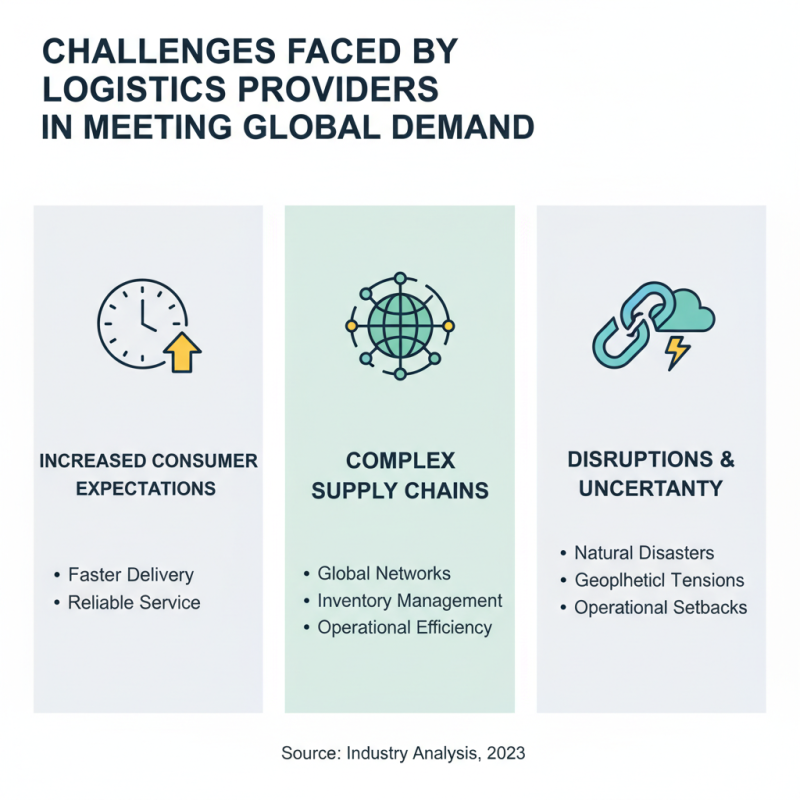
Challenges Faced by Logistics Providers in Meeting Global Demand
The logistics industry faces significant challenges in meeting the growing global demand. Increasing consumer expectations drive the need for faster and more reliable services. Meanwhile, complex supply chains make it difficult for providers to maintain efficiency. Disruptions due to natural disasters or geopolitical tensions can severely affect operations.
Technology integration is another hurdle. Many logistics providers struggle to adopt new technologies quickly. While automation and AI promise improved efficiency, implementation costs can be high. Training personnel to use sophisticated systems often lags behind. A balance must be struck between innovation and practical execution.
Moreover, sustainability concerns pose a dilemma. Clients increasingly demand eco-friendly options. However, transitioning to greener practices can mean higher costs in the short term. Therefore, logistics providers are caught in a challenging position. Meeting global demand requires navigating tight margins while also adhering to sustainable principles. This dual pressure raises questions about the industry's direction.
Top Logistic Providers to Watch in 2026: Profiles and Services
In 2026, the logistics industry will evolve rapidly. Global buyers will seek dependable logistics providers. These providers will offer innovative solutions to address unique challenges. Understanding their services is crucial for effective supply chain management.
Top providers will focus on comprehensive logistics services. They will manage transportation, warehousing, and customs clearance. Real-time tracking and data analytics will enhance transparency. Buyers should assess the technology and infrastructure of potential providers. Reliability in delivery timelines will remain a priority.
Tips: Evaluate the customer service quality of logistics providers. Communication is key. Choose providers that offer flexibility for changing demands. Always consider their experience in your industry. These factors can influence long-term success in your logistics operations.
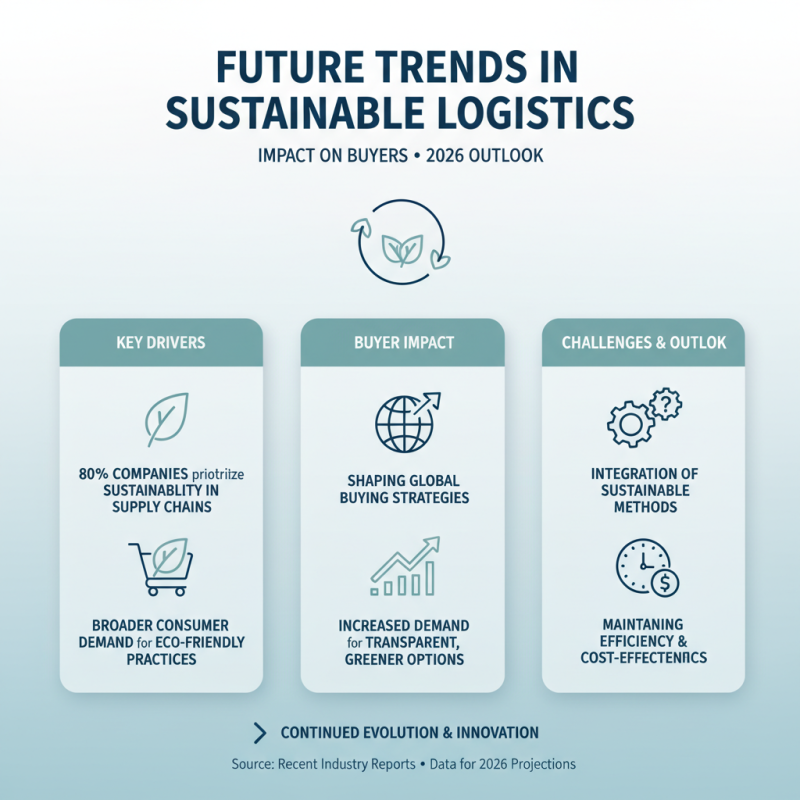
Future Trends in Sustainable Logistics and Their Impact on Buyers
As we look toward 2026, sustainable logistics will increasingly shape global buying strategies. Recent reports indicate that over 80% of companies are prioritizing sustainability in their supply chains. This trend reflects a broader consumer demand for eco-friendly practices. However, challenges remain in fully integrating sustainable methods while maintaining efficiency.
Logistic providers will need to invest in advanced technologies, such as electric vehicles and smart routing. A study by the International Council on Clean Transportation suggests that switching to electric fleets could reduce emissions by over 30% within a decade. For buyers, this presents an opportunity to align their purchasing decisions with environmental goals. The pressure on logistics firms to innovate and adopt greener solutions will grow, but implementation can be inconsistent. Not all providers will reach the same level of sustainability.
The impact on buyers is significant. Those who choose suppliers committed to eco-friendly practices can enhance their brand reputation. However, not all sustainable options will meet operational needs. Price points may also fluctuate. Buyers must carefully assess how sustainability aligns with their long-term strategies while navigating possible trade-offs in cost and efficiency. Sustainable logistics is a journey, not a destination; the path will have its bumps.