Choosing the right logistic provider is crucial for any business. A reliable logistic partner ensures smooth operations and timely deliveries. With so many options available, selecting the perfect provider can be overwhelming. It requires careful consideration and strategic planning.
Logistic providers are not just transporters; they shape your supply chain. Their expertise can save you time and money. However, not all providers are created equal. Some may lack the technology or infrastructure needed to meet your demands. Others might overpromise but underdeliver, leading to frustration.
Understanding your specific needs is vital. Think about the type of goods you transport and the regions involved. Quality service can transform your business, while poor choices can lead to setbacks. Reflect on your past experiences and learn from them. This journey can make you a more informed decision-maker, ultimately finding the right logistic provider for your needs.

Choosing the right logistics provider begins with a clear understanding of your logistics needs. Many companies overlook this crucial step. According to a 2022 report by the Council of Supply Chain Management Professionals, 79% of businesses suffer delays due to poor logistics planning. Assessing your specific requirements can prevent these costly mistakes.
Start by identifying the types of goods you handle. Are they perishable, fragile, or bulky? Each category requires different handling and transportation methods. For instance, temperature-sensitive items need specialized transport to avoid spoilage. Additionally, consider your service areas and delivery timelines. A logistics partner must align with your operational reach and customer expectations.
Don't forget to evaluate your technology needs. A recent study revealed that businesses using logistics software saw a 20% increase in efficiency. However, many providers lack advanced tracking systems, which can lead to operational hiccups. Choose a partner who understands your tech needs. Reflect on your past experiences with logistics. Identifying areas for improvement leads to better choices. Balancing cost with quality remains challenging. Sometimes, the cheapest option may not support your long-term goals. Take time to analyze these factors.
When selecting a logistics provider, evaluating their experience is crucial. Look for companies with a proven track record in your specific industry. This can include years in operation, the variety of services offered, and successful case studies. Experienced providers can navigate complexities and unforeseen challenges more effectively. They understand the nuances of shipping, customs, and supply chain management.
Reputation plays a significant role as well. Research online reviews and ask for client testimonials. A respected provider often has strong industry connections. Check for awards or certifications that validate their reliability. An outstanding reputation can instill confidence, but be cautious. Not all reviews are genuine, and some might be overly flattering. Engage in conversations with existing clients to get a clearer picture of their services.
While experience and reputation are important, not all long-standing providers are a fit. Occasionally, newer companies can offer innovative solutions and personalized services. Balancing these elements requires careful consideration and research. A comprehensive evaluation helps ensure your logistics partner aligns with your business goals. Don't rush the decision; it can impact your entire supply chain.
When selecting a logistics provider, understanding cost structures is critical. Different providers adopt various pricing models. Some charge per shipment, while others may use a per mile or weight approach. These models impact your budgeting significantly. For example, a provider with lower upfront costs may have hidden fees that accumulate over time.
Transparency in pricing is essential. Always ask for a breakdown of the costs involved. This helps you grasp what you are paying for. Some providers offer packages that include additional services. Compare these with a basic pricing model to assess value. Hidden charges can create surprises. A logistics provider may charge for fuel surcharges or accessorial fees that inflate the final price.
Evaluating the total cost of ownership is vital. Look beyond just the sticker price. Analyze how costs affect your overall operations. Are you getting reliable service? Reliability can save money in the long run. A provider that offers a clear pricing structure and consistent service often proves more reliable. Make sure to review contracts carefully. Understanding the terms can prevent unforeseen expenses and enhance your decision-making process.
When selecting a logistics provider, technology and tracking capabilities play pivotal roles. Advanced tracking systems can offer real-time updates. This transparency reduces anxiety for businesses and consumers. Knowing where goods are at every moment builds trust. However, not all providers have the same level of technology. Some may invest heavily in tracking tools, while others lag behind. This inconsistency can affect service quality significantly.
Assessing technology isn’t just about features. It requires understanding how those features enhance efficiency. A provider might boast of cutting-edge software, but if their team lacks training, effectiveness suffers. Integration with existing systems is crucial. If tracking tools complicate processes rather than streamline them, the choice may warrant reconsideration.
Also, consider user experiences. Testimonials often reveal gaps between promises and reality. Some clients may face challenges during peak seasons. Their feedback can provide insights into how technology performs under pressure. Thus, a logistics provider should not only offer innovative technology but also demonstrate reliability through robust performance in various scenarios.
| Tip No. | Tip | Description | Technology Involved | Tracking Capabilities |
|---|---|---|---|---|
| 1 | Assess the Provider’s Experience | Evaluate the provider’s years in the industry and expertise in specific sectors. | Advanced analytics and reporting tools | Real-time shipment tracking |
| 2 | Evaluate Technology Integration | Check if the provider can integrate with your existing systems. | API and EDI capabilities | Automated status notifications |
| 3 | Consider Geographic Coverage | Ensure the provider covers all necessary regions for your business. | Geolocation services | Location tracking on maps |
| 4 | Review Customer Service | Evaluate response times and support options. | Support management tools | Issue tracking systems |
| 5 | Check for Compliance and Licenses | Ensure the provider adheres to industry regulations. | Compliance management software | Audit tracking tools |
| 6 | Evaluate Cost Structures | Understand pricing models and any hidden fees. | Cost optimization software | Cost tracking features |
| 7 | Verify Track Record | Look for testimonials and case studies from past customers. | Data analytics tools | Performance metrics dashboards |
| 8 | Assess Flexibility and Scalability | Ensure the provider can grow with your business needs. | Scalable solutions offered | Dynamic tracking adjustments |
| 9 | Inquire About Value-Added Services | Identify additional services like packaging or customs clearance. | Service management platforms | Enhanced shipment visibility |
| 10 | Test Their Technology | Request a demo of their technology and tracking system. | Interactive demos and trials | Trial tracking access |
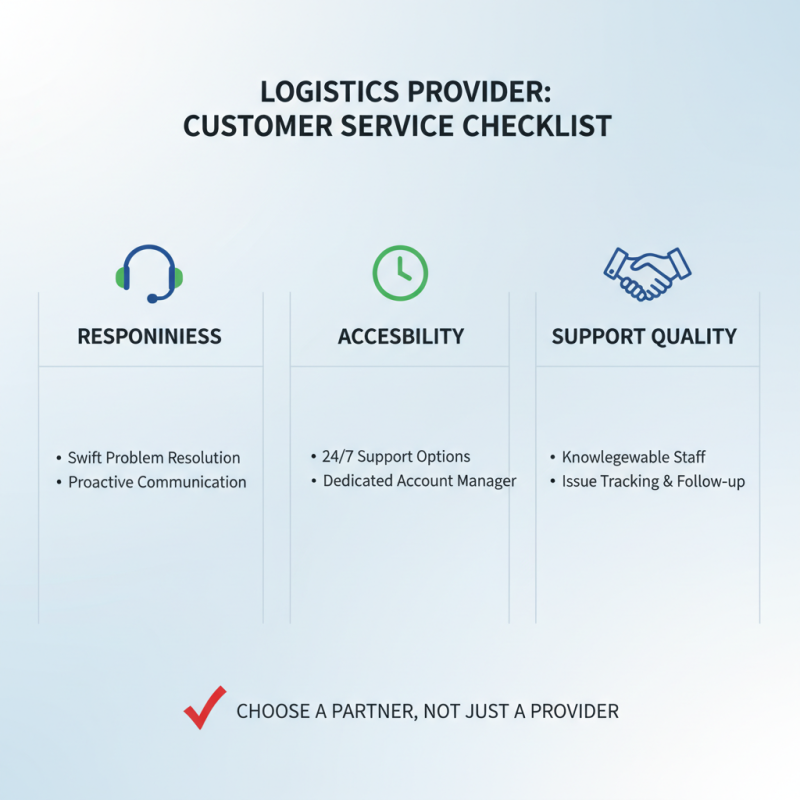
Choosing the right logistics provider can be a daunting task. One of the most critical factors to consider is customer service and support options. Strong customer service can make a significant difference in your logistics experience. A responsive provider can handle problems swiftly. Being accessible is essential during tight deadlines or unexpected issues.
Look for providers that offer multiple support channels. This includes phone, email, and live chat options. It’s vital to check their response times. Quick responses show a commitment to service. Reliable communication can ease your worries and build trust. Don’t hesitate to ask for references or customer testimonials. Hearing from others can provide valuable insights.
Sometimes, logistics providers fall short in support. They may have long wait times or unhelpful staff. It’s crucial to assess a provider’s consistency in service. Regular feedback is necessary. Effective partnerships thrive on communication. Reflect on your past experiences with customer service. What worked, and what didn’t? Understanding your needs can lead you to a more suitable logistics partner.