2026 How to Optimize International Logistics for Global Efficiency?
International logistics play a vital role in the global supply chain landscape. The World Bank estimates that logistics costs account for about 11% of global GDP. Efficient international logistics can significantly reduce these costs and enhance competitiveness. According to a report by Deloitte, organizations that optimize their logistics strategy can improve service levels by up to 30%.
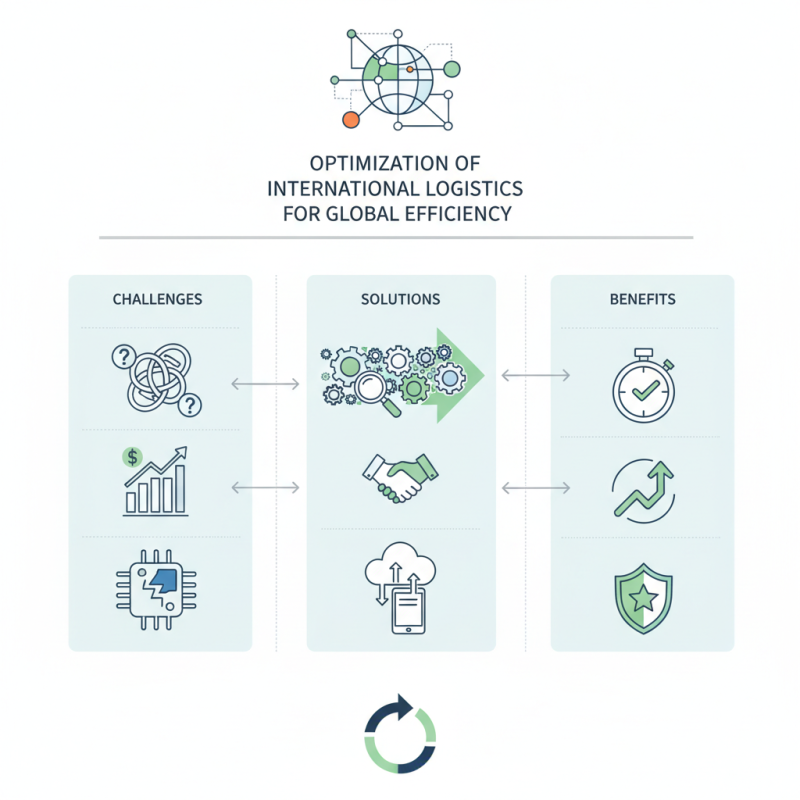
However, the journey toward global efficiency is complex. Many companies still face challenges such as unclear regulations, fluctuating costs, and inadequate technology. For instance, a survey by McKinsey found that 75% of logistics leaders cite visibility and collaboration as significant obstacles. This points to a need for businesses to reflect on their practices and identify areas for improvement.
As companies expand their reach across borders, understanding international logistics becomes increasingly crucial. It requires not just expertise but also the ability to adapt to changing market conditions. Failure to innovate may lead to missed opportunities and increased operational costs. Therefore, it is essential for businesses to continually assess their logistics strategies to remain competitive in the ever-evolving global market.
Strategies for Assessing Current International Logistics Systems
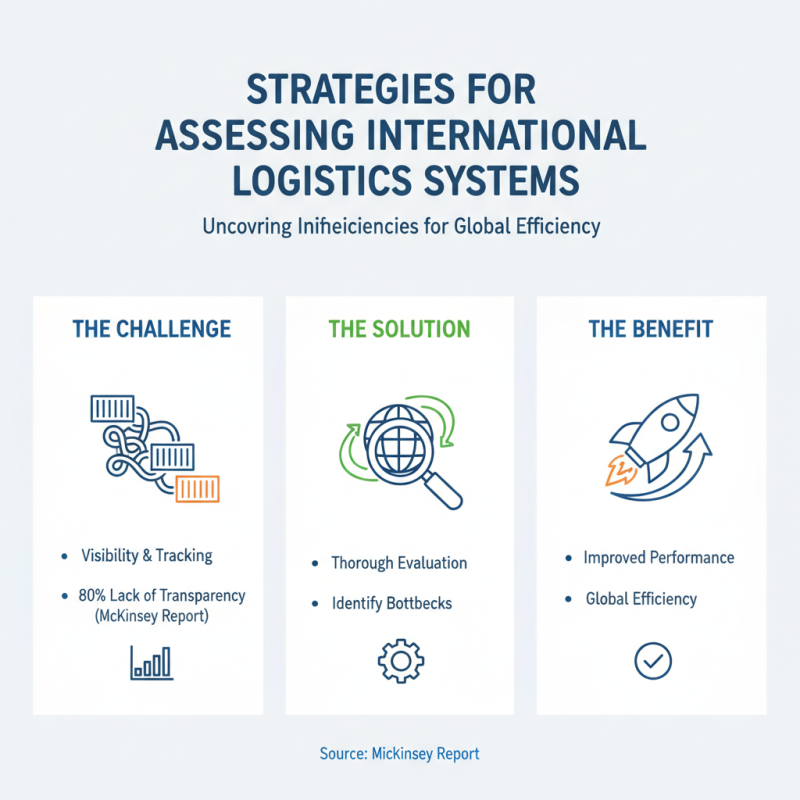
In the quest for global efficiency, assessing current international logistics systems is crucial. Many companies face challenges with visibility and tracking shipments. According to a McKinsey report, nearly 80% of logistics executives cite lack of transparency as a major pain point. A thorough evaluation of existing logistics practices can uncover inefficiencies that hinder performance.
Consider conducting a SWOT analysis to identify strengths, weaknesses, opportunities, and threats within your logistics operations. This method provides a clear picture of where improvements are needed. For instance, focusing on technology implementation can enhance tracking capabilities. Implementing IoT solutions can streamline operations.
Tip: Regularly review your logistics partnerships. This can reveal potential areas for cost savings and efficiency boosts. Moreover, consider refining your supply chain network. According to Deloitte, optimizing routes can save up to 10% in transportation costs annually.
To fully optimize your logistics, invest in training for your teams. Employees equipped with the latest knowledge can adapt to changing market demands. Remember, logistics is not static. It's essential to frequently reassess strategies to remain competitive in a global marketplace.
Key Technologies for Enhancing Global Logistics Efficiency
In today's globalized economy, optimizing international logistics is crucial. Key technologies play a significant role in enhancing efficiency. Automation, for instance, improves loading processes. Automated systems can reduce human error. This means quicker turnaround times and fewer delays.
Data analytics is another game changer. It enables companies to track shipments in real-time. With accurate data, businesses can anticipate challenges. They can respond swiftly to disruptions. However, relying too heavily on data can lead to overconfidence. Not all variables can be predicted.
Blockchain technology offers transparency and security. It helps in verifying shipments and preventing fraud. Yet, its implementation can be complex. Training staff and modifying existing systems is often necessary. Organizations must weigh the costs against potential benefits.
Global Logistics Efficiency Optimization by Key Technologies (2026)
Best Practices for Supply Chain Collaboration in International Markets
Effective supply chain collaboration is essential in international markets. Companies face various challenges, including differing regulations, cultural barriers, and logistical complexities. According to a report by Deloitte, 79% of businesses with high-performing supply chains achieve revenue growth that exceeds their industry peers. To enhance collaboration, organizations must invest in technology that facilitates communication across borders.
Utilizing platforms that provide real-time data sharing can drastically improve decision-making. For instance, firms using blockchain technology have reported a 40% reduction in discrepancies in shipment data. This transparency fosters trust among partners and aids in swift problem resolution. Moreover, regular training sessions can help teams understand cultural nuances, promoting smoother interactions and strengthening partnerships.
However, relying solely on technology can lead to disconnect. Personal relationships still play a crucial role in effective collaboration. Some companies might overlook this aspect, which can hinder their performance. Balancing technology use with human touch proves vital. Continuous reflection on these strategies might reveal areas for improvement, ensuring that the supply chain is both resilient and efficient.
Impact of Regulatory Compliance on Global Logistics Performance
Regulatory compliance plays a pivotal role in global logistics performance. Companies must adhere to various regulations across different countries. This complexity can lead to delays and increased costs. Navigating these regulations is often challenging. Each country has its own set of rules that can change frequently. This uncertainty can disrupt supply chains.
Effective strategies to manage compliance include investing in technology. Automated systems can help track changing regulations. They can also facilitate documentation processes. Training staff on compliance issues is essential too. Employees need to understand the criteria to avoid penalties. However, even with the best systems, human error can occur.
Additionally, companies should foster relationships with local authorities. Understanding cultural nuances is vital for smooth operations. Yet, maintaining these relationships can be resource-intensive. This demands ongoing attention and effort from logistics teams. In this dynamic landscape, companies must adapt and learn continuously. The path to compliance may not always be clear, but it's crucial for global efficiency.
Future Trends in International Logistics Optimization Techniques
In the rapidly evolving landscape of international logistics, optimizing for efficiency has never been more crucial. Businesses must stay ahead by incorporating innovative technologies and adaptive strategies. One key trend is the use of automation in warehousing. Automated systems can significantly boost processing speed and accuracy. However, companies might face challenges in integrating these technologies with existing operations.
Sustainability is another rising trend. Many organizations now prioritize eco-friendly practices to meet consumer expectations. Utilizing alternative fuels and optimizing routes can reduce carbon footprints. Yet, decision-makers must balance cost and sustainability, often leading to tough choices. Data analytics also plays a transformative role. By leveraging real-time data, companies can improve supply chain visibility. This could lead to more informed decisions, though it requires dedication and skilled personnel to interpret complex datasets.
Collaboration between stakeholders is essential. Sharing information and resources can enhance efficiency, fostering stronger partnerships. Yet, businesses may struggle with trust issues and information sharing. This requires open communication and a shift in mindset. The journey towards optimizing logistics is complex and fraught with challenges. Reflecting on these issues will help businesses emerge stronger in the competitive global market.