2026 How to Navigate International Transportation Efficiently?
Navigating international transportation can be challenging. This complexity arises from various factors such as regulations, logistics, and diverse cultures. Understanding these aspects is crucial for successful global trade.
International transportation involves several modes, including air, sea, and land. Each mode has unique requirements and benefits. Choosing the right option requires careful planning and consideration. Time efficiency and cost-effectiveness often conflict, leading to difficult choices.
Many companies overlook the importance of detailed route planning. They may underestimate delays caused by customs or other checkpoints. This oversight can lead to financial losses and damage to reputation. Learning from past mistakes can enhance future strategies. Efficient navigation of international transportation can significantly impact global success.
Understanding the Basics of International Transportation Systems
Understanding international transportation systems is crucial for efficient logistics. According to a 2021 report by the International Maritime Organization, 90% of global trade is conducted through shipping. This highlights the significance of maritime transport. It’s vital to recognize the complexities of air, land, and sea logistics.
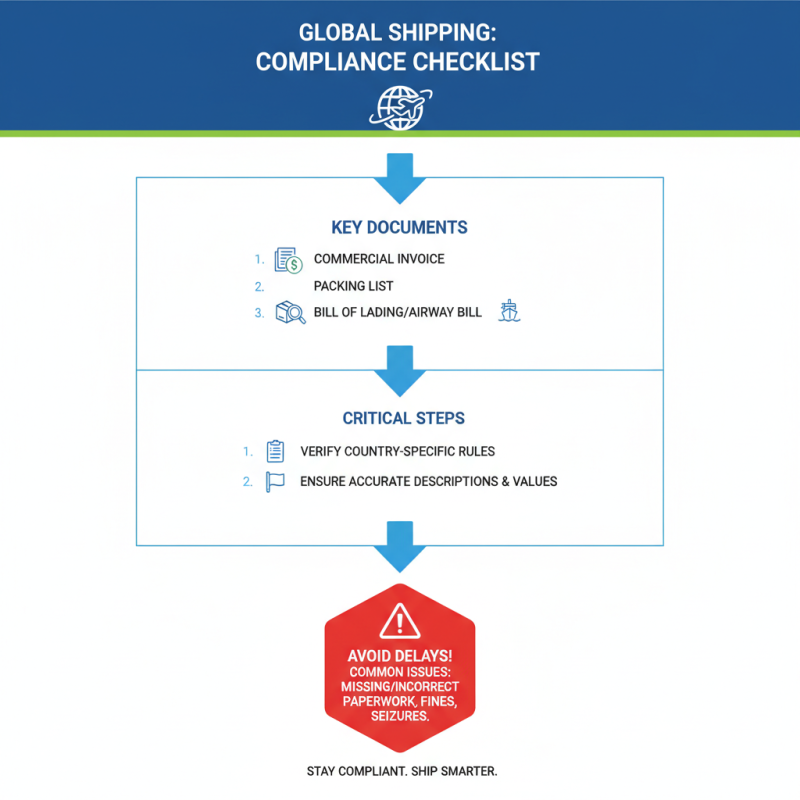
Effective navigation of these systems requires understanding customs regulations, documentation, and tariffs. The World Bank's Logistics Performance Index indicates that countries with streamlined customs processes see an increase in shipment efficiency by 15%. Delays can often arise from improperly completed paperwork or misunderstanding local laws. Avoid these pitfalls by learning the basics.
**Tip:** Always verify current regulations and fees before shipping. Small mistakes can lead to big expenses.
Understanding the balance between cost and speed can be tricky. For instance, air freight is faster but more expensive than sea freight. A recent study found that companies often overestimate their needs in urgency, resulting in unnecessary costs. It’s essential to evaluate your priorities carefully.
**Tip:** Assess your logistics needs regularly. Adapt to changing market conditions and prioritize smartly.
International Transportation Modes Efficiency (2026)
Key Factors Affecting Transportation Efficiency Across Borders
International transportation presents unique challenges. Different regulations, customs processes, and logistical issues can slow down operations. Understanding key factors can significantly enhance efficiency across borders.
Timely documentation is crucial. Ensure all paperwork is done before the journey. Missing documents can lead to delays. Have backup copies ready. This marks an organizational strength. Communication is equally important. Stay proactive with carriers and local authorities. Misunderstandings can disrupt schedules. Build strong relationships to facilitate smoother operations.
Consider local regulations, too. Each country has unique laws. Research these in advance to avoid fines and delays. Engaging local experts can be beneficial. They can navigate complexities effectively. Adapting to varying standards will save time and money.
Tips: Always track shipments actively. Utilize technology to monitor progress. Be prepared for unexpected issues. Flexibility can help manage unforeseen challenges. Foster a culture of continuous improvement. Reflect on past experiences to streamline future operations.
2026 How to Navigate International Transportation Efficiently? - Key Factors Affecting Transportation Efficiency Across Borders
| Key Factor |
Description |
Impact Level (1-5) |
Example Metric |
| Customs Regulations |
Adherence to laws and regulations that govern cross-border transport. |
5 |
Average clearance time in hours |
| Transport Infrastructure |
Quality of roads, ports, and railroads affects transportation speed and safety. |
4 |
Road quality index |
| Logistics Providers |
Reliability and efficiency of shipping and freight operators. |
4 |
On-time delivery rate |
| Technology Integration |
Use of digital tools for tracking and managing shipments. |
5 |
Percentage of automated processes |
| Bilateral Agreements |
Agreements that facilitate trade between countries. |
3 |
Number of agreements in place |
Strategies for Choosing the Right Mode of Transportation
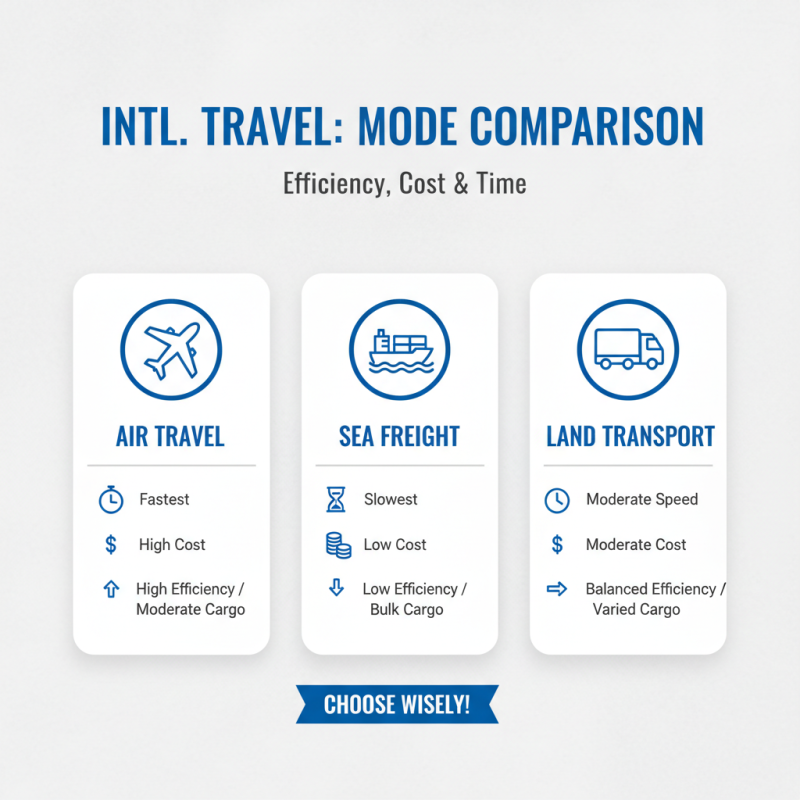
When choosing the right mode of transportation for international travel, consider efficiency, cost, and time. Each option has its pros and cons. Air travel is quick but often expensive. Sea freight might be cheaper but takes longer. Sometimes, land transport can provide a good balance.
**Tips:** Research multiple transportation options. Look for local carriers that might offer better rates. Don’t forget to verify safety records. Always plan routes carefully to avoid unexpected delays.
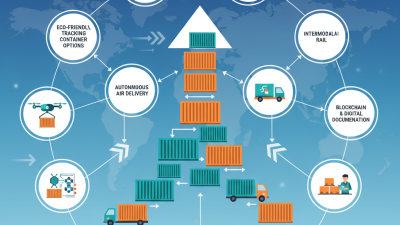
Also, think about the volume and nature of your goods. Fragile items might need special handling. Perishables should travel by air. Each mode requires specific preparation. Some transport modes can be more eco-friendly, which is an important consideration for many.
**Tips:** Check for sustainable options. They often come at a premium but may provide long-term savings. Communication with your carrier is key. Staying informed can prevent costly mistakes.
Technology's Role in Streamlining International Logistics
In the world of international transportation, technology plays a pivotal role in logistics efficiency. A recent report highlighted that leveraging advanced technologies can save businesses up to 20% in transportation costs. Automated systems streamline operations, reduce errors, and speed up delivery times. Companies are increasingly adopting AI and machine learning to optimize shipping routes and manage inventory effectively.
Data analytics is crucial. It informs decision-making and predicts demand trends. This leads to improved supply chain visibility and responsiveness. A survey found that 70% of logistics companies now utilize data analytics for route optimization. This indicates a significant shift toward data-driven strategies in global transport.
Tips: When exploring technology options, consider cloud-based platforms. These provide real-time updates and enhance communication among stakeholders. Additionally, invest in training your team on new tools. This can mitigate resistance to change, ensuring smoother transitions. Constant evaluation of tech solutions is essential. Seek out systems that can adapt to your unique needs, rather than a one-size-fits-all approach.