Top 10 Essential Tips for International Transportation Success
In the ever-evolving world of global commerce, the importance of efficient and reliable International Transportation cannot be overstated. As businesses strive to expand their footprint across borders, navigating the complexities of this industry becomes crucial for success. Renowned logistics expert Dr. Emily Chen notes, "Understanding the nuances of International Transportation is key to unlocking new markets and ensuring timely delivery." This highlights the need for organizations to adopt a strategic approach in their transportation processes.
International Transportation encompasses a myriad of factors, from regulatory compliance to logistics coordination. Businesses must stay informed about international trade agreements and customs procedures to streamline their operations. Moreover, leveraging technology can enhance visibility and efficiency, leading to better decision-making.
In this guide, we will explore the top 10 essential tips for achieving success in International Transportation. By adopting these strategies, companies can effectively mitigate risks, optimize their supply chain, and ultimately, drive growth in the competitive landscape of global trade.

Understanding International Transportation Regulations and Compliance
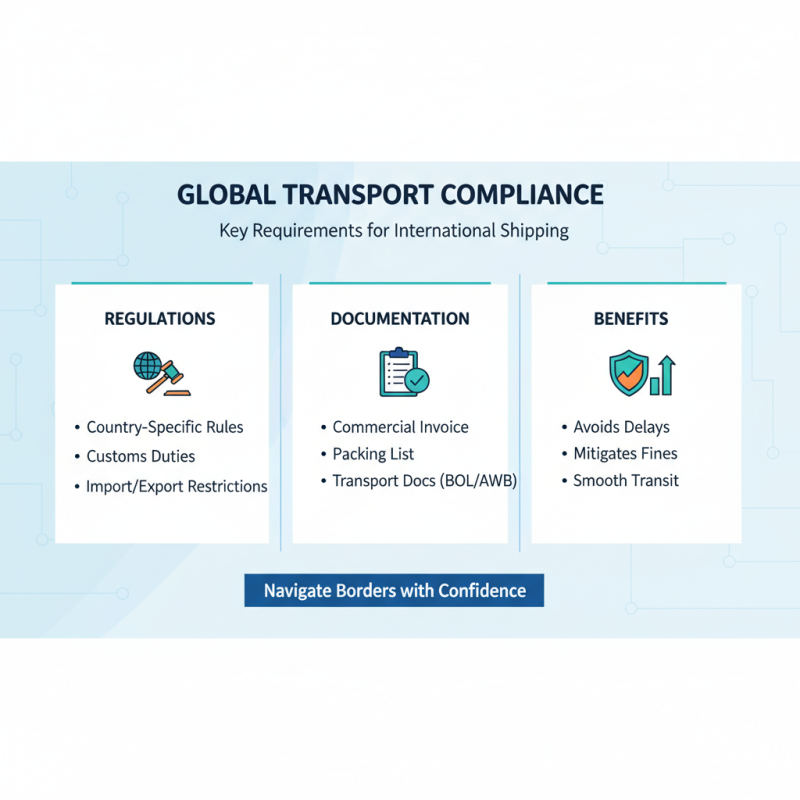
Navigating the complex landscape of international transportation requires a solid understanding of regulations and compliance. At the forefront is the need to familiarize oneself with the legal requirements governing the transit of goods across borders. Each country has its own set of regulations, including customs duties, import/export restrictions, and documentation requirements. For businesses looking to transport goods internationally, ensuring that they have the correct paperwork, such as commercial invoices, packing lists, and transport documents, is essential. This not only avoids costly delays but also mitigates the risk of fines and penalties.
Moreover, compliance with environmental regulations and safety standards is crucial in international transportation. Different regions may impose specific guidelines aimed at reducing carbon emissions, maintaining safety protocols, and protecting local ecosystems. Companies must stay informed about these regulations to avoid non-compliance, which can have serious repercussions. Implementing a robust compliance management system can help streamline the process, ensuring that all shipping practices meet international standards while promoting sustainability. By prioritizing understanding and adherence to these regulations, businesses can enhance their operational efficiency and build a trustworthy reputation in the global marketplace.
Choosing the Right Mode of Transportation for Global Shipping
When it comes to global shipping, selecting the appropriate mode of transportation is crucial for ensuring timely and cost-effective delivery. The decision often hinges on several factors, including the nature of the goods being shipped, the destination, urgency, and budget constraints. For example, air freight is an excellent choice for high-value or perishable items that demand quick delivery, while sea freight may be more economical for bulk shipments over long distances. Understanding the pros and cons of each mode can help businesses make informed decisions tailored to their specific needs.
Another significant consideration is the infrastructure available at both the origin and destination points. Modes like rail and road transport play a key role in connecting ports to final destinations, influencing overall transit time and cost. For international shipments, effective integration of different transport modes—often referred to as intermodal transportation—can maximize efficiency and streamline the shipping process. By evaluating factors such as transit time reliability, cost-effectiveness, and delivery coverage, companies can optimize their logistics strategy, ensuring their products reach customers swiftly and securely, regardless of geographical barriers.
Establishing Effective Communication with Global Partners
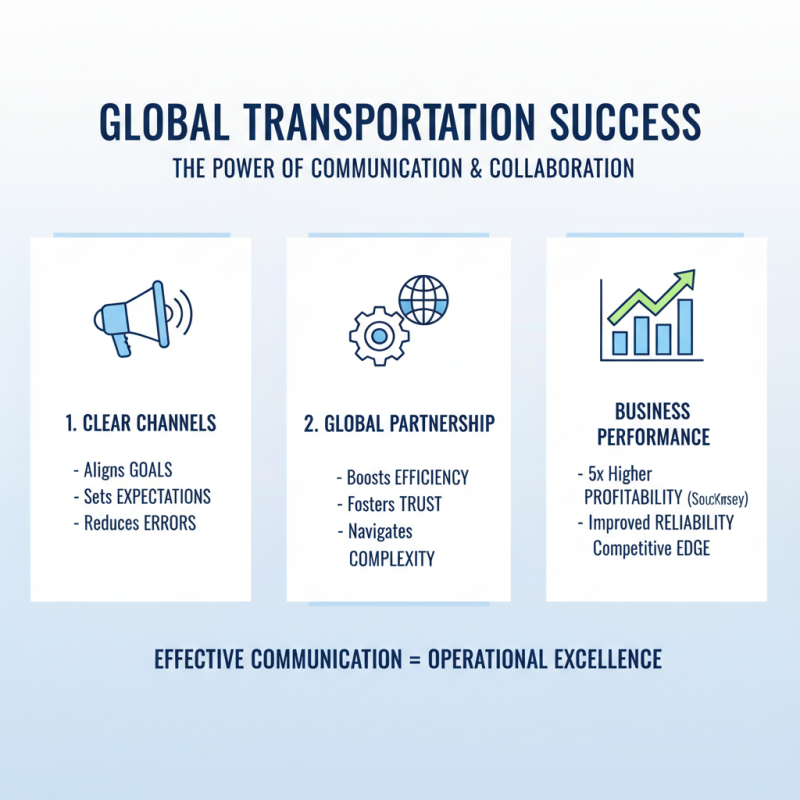
Effective communication is vital for success in international transportation, where collaboration with global partners can significantly impact operational efficiency and overall business performance. According to a report by McKinsey, companies that excel in communication and collaboration are 5 times more likely to outperform their peers in profitability. Establishing clear channels of communication is therefore essential for aligning goals and expectations among all stakeholders involved.
One effective tip for enhancing communication with global partners is to adopt multilingual communication tools. In a global marketplace, speaking the language of your partners can mitigate misunderstandings and foster more robust relationships. A survey by the Globalization and Localization Association found that 75% of consumers prefer to purchase products in their local language, underscoring the importance of localizing communications.
Additionally, utilizing project management software enables real-time communication and updates on transport logistics. A report from Gartner indicates that organizations employing such tools experience a 15% increase in project performance. Regular updates and transparent dialogue help ensure that everyone is on the same page, minimizing errors and delays while maximizing trust and cooperation throughout the transportation process.
Implementing Risk Management Strategies for International Transport
In international transportation, effective risk management strategies are paramount for success. According to the International Transport Forum (ITF), transportation risk management involves identifying, assessing, and mitigating risks that could disrupt logistics operations. In fact, over 80% of logistics companies have reported increased risks in their operations due to political instability, natural disasters, and regulatory changes. An integrated risk management approach can help organizations foresee potential disruptions and develop contingency plans, thus safeguarding their supply chains.
One essential risk management strategy is the implementation of a robust insurance policy that covers various transportation risks. The 2023 Global Transportation Risk Management Report indicates that companies with comprehensive insurance plans experience 30% less financial loss during unforeseen events. Additionally, utilizing real-time tracking technology fosters transparency and mitigates risks associated with cargo loss or damage. By equipping transportation modes with GPS and IoT devices, firms can enhance their operational visibility and respond swiftly to any incidents, ensuring that they adhere to delivery schedules and maintain client trust. This multifaceted approach to risk management not only protects assets but also supports long-term business sustainability in an increasingly interconnected global market.
Top 10 Essential Tips for International Transportation Success
Optimizing Costs and Efficiency in Global Supply Chain Logistics
In the realm of international transportation, optimizing costs and enhancing efficiency are crucial for a successful supply chain. Streamlining processes not only reduces expenses but also accelerates delivery times, enabling businesses to stay competitive. To achieve this, consider implementing a robust logistical strategy that focuses on the following tips.
Firstly, effective communication with all stakeholders is vital. Keeping open lines with suppliers, freight forwarders, and customers ensures everyone is on the same page regarding shipment statuses and any potential delays. This transparency minimizes misunderstandings and helps to manage expectations, ultimately leading to smoother operations.
Secondly, investing in technology can significantly improve supply chain efficiency. Using advanced tracking systems enables real-time visibility of shipments, allowing companies to make informed decisions quickly. Additionally, data analytics can identify trends and areas for improvement, ensuring that resources are allocated effectively and operational costs are kept in check. By leveraging these tools, businesses can create a more agile and responsive international transportation network.
Top 10 Essential Tips for International Transportation Success
| Tip Number |
Tip Description |
Expected Benefits |
| 1 |
Conduct Regular Cost Analysis |
Identify opportunities for savings and budget optimization |
| 2 |
Utilize Technology for Tracking |
Improved visibility and real-time updates |
| 3 |
Negotiate with Carriers |
Better rates and service agreements |
| 4 |
Optimize Route Planning |
Time savings and reduced fuel costs |
| 5 |
Choose the Right Mode of Transport |
Cost efficiency and timeliness |
| 6 |
Implement Quality Control Measures |
Minimize losses and damages |
| 7 |
Comfortable with Global Regulations |
Avoid fines and delays |
| 8 |
Develop Strong Supplier Relationships |
Improve service and reliability |
| 9 |
Leverage Consolidation Opportunities |
Reduce shipping expenses |
| 10 |
Continuous Improvement Review |
Enhance efficiency and adapt to changes |