What is Container Transport and How Does it Work?
Container transport is a vital part of global trade. It allows goods to be moved efficiently and cost-effectively across vast distances. According to the International Chamber of Shipping, around 90% of world trade is carried by sea. In 2022, the global container shipping market was valued at approximately $14 trillion. This highlights the significance of container transport in our economy.
The process involves multiple steps and various players, including shipping companies, freight forwarders, and customs authorities. Each entity plays a role in ensuring seamless transit. However, the sector also faces challenges. Port congestion, fluctuating fuel prices, and environmental regulations can disrupt operations. Reports from the World Economic Forum suggest that inefficiencies in container transport can delay deliveries by up to 30%.
Understanding how container transport works is crucial for businesses and consumers alike. It provides insight into the complexities of logistics and supply chain management. Despite advancements, the industry requires continuous improvement to address its shortcomings. With evolving demands and growing environmental concerns, the future of container transport may need rethinking.
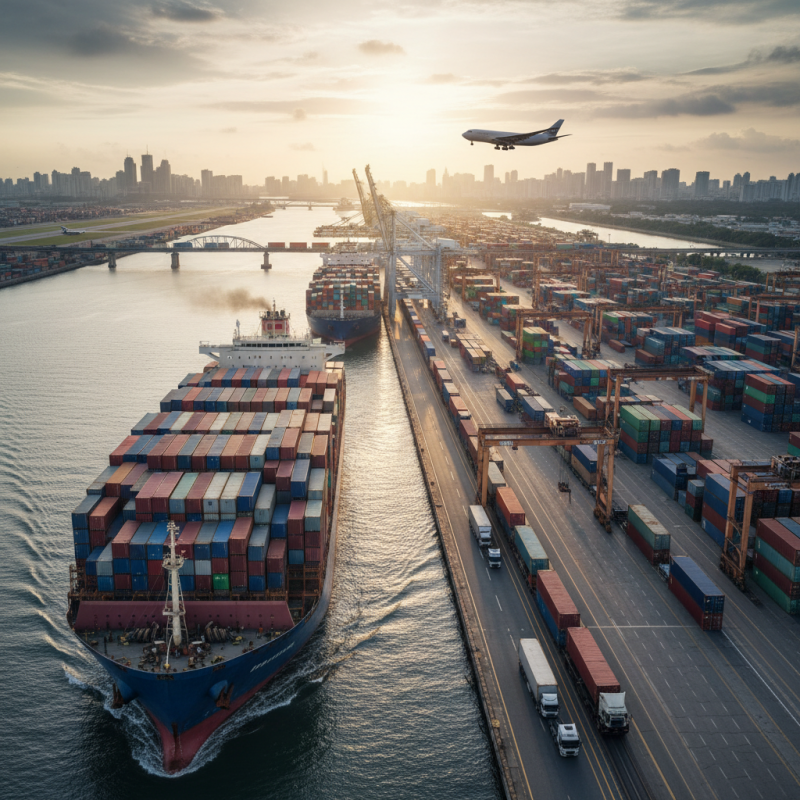
What is Container Transport?
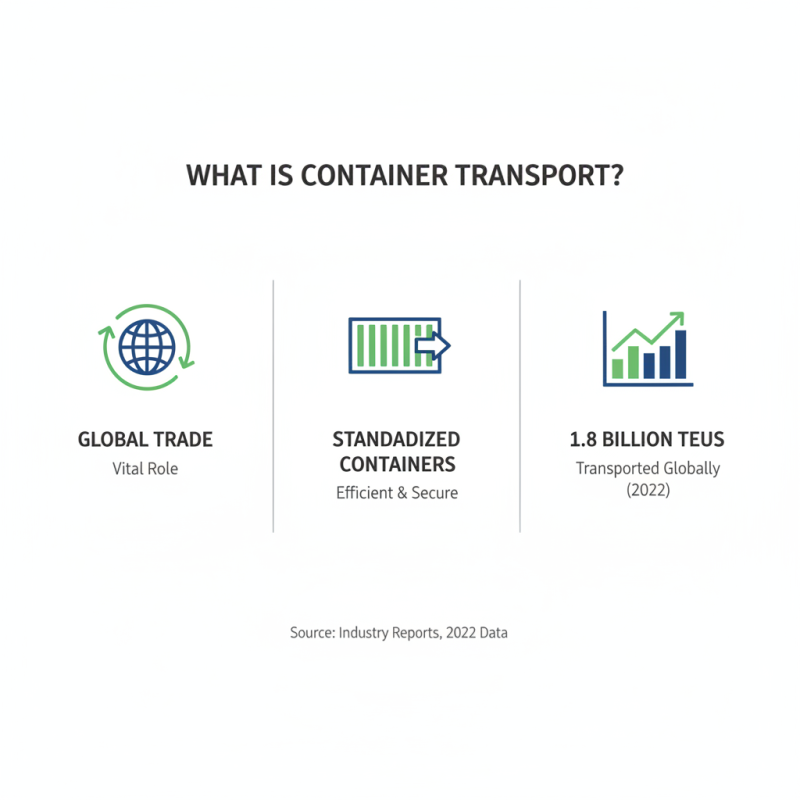
Container transport plays a vital role in global trade. It involves the movement of goods in standardized containers. This method has revolutionized shipping by offering efficiency and security. In 2022, approximately 1.8 billion twenty-foot equivalent units (TEUs) were transported globally, underscoring its importance.
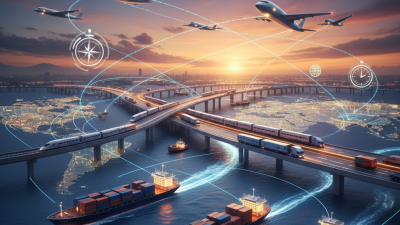
Container transport relies heavily on intermodal systems. Different transport modes—ships, trucks, and trains—work together seamlessly. A report by the International Maritime Organization highlights that container shipping accounts for over 80% of global trade by volume. Despite its advantages, challenges remain. Port congestion and infrastructure limitations can hinder operations. In some regions, inefficiencies lead to delays and increased costs.
The environmental impact of container transport also raises concerns. Inefficient practices can contribute to a significant carbon footprint. The industry must address these issues to improve sustainability. As container transport develops, balancing efficiency and environmental responsibility will be crucial for future growth.
The History and Evolution of Container Transport
The history of container transport dates back to the 1950s. It revolutionized shipping. Before containers, goods were packed individually. This method was inefficient and slow. Loading and unloading ships took days. Containers changed that.
In the early days, the idea was simple: a box to hold items. The first containers were made from metal. They were standardized in size, allowing easy stacking. This innovation made transport more efficient. Ports became busier, and wait times decreased. However, adapting to this new system was challenging. Many ports struggled to accommodate containers.
As global trade grew, so did container transport. It facilitated international shipping on a large scale. Yet, issues arose. Some ports lacked the infrastructure for larger ships. Others faced congestion. Despite these challenges, container transport remains vital. It connects economies and enhances trade. The evolution continues, proving that even successful systems need reflection and improvement.
How Container Transport Works: Key Processes
Container transport is a crucial aspect of global trade. It involves the movement of goods in standardized containers. These containers streamline loading, unloading, and transfer processes. This method minimizes shipping time and maximizes efficiency.
The key processes in container transport include loading, transportation, unloading, and customs clearance. During loading, containers are carefully packed to prevent damage. The International Maritime Organization reported that nearly 90% of world trade is carried by sea, highlighting the importance of this process. Transportation primarily happens via ships, trucks, and trains, ensuring goods reach their destinations quickly.
Customs clearance can be a bottleneck. Delays can occur due to incomplete documentation. The World Customs Organization noted that 30% of shipments face customs-related delays. It's essential for shippers to comply with regulations and avoid these issues. Continuous improvement in technology and communication can help mitigate these challenges. Overall, container transport remains vital, yet it requires ongoing reflection and adaptation to enhance performance.
What is Container Transport and How Does it Work?
| Process |
Description |
Duration (Typical) |
Key Components |
| Container Loading |
The process of placing goods into shipping containers for transport. |
1-3 days |
Forklifts, cranes, containers |
| Transport to Port |
Moving the loaded containers from the warehouse to the shipping port. |
3-5 days |
Trucks, rail |
| Customs Clearance |
The process of ensuring that goods comply with all regulations and documentation. |
1-2 days |
Customs documents, compliance checks |
| Shipping |
Transporting containers across the sea to the destination port. |
2-6 weeks |
Cargo ships, shipping lines |
| Unloading |
The process of removing containers from the ship upon arrival at the destination port. |
1-2 days |
Cranes, gantry systems |
| Final Delivery |
Transporting containers from the port to the final destination. |
1-5 days |
Trucks, last-mile logistics |
Types of Containers Used in Transport
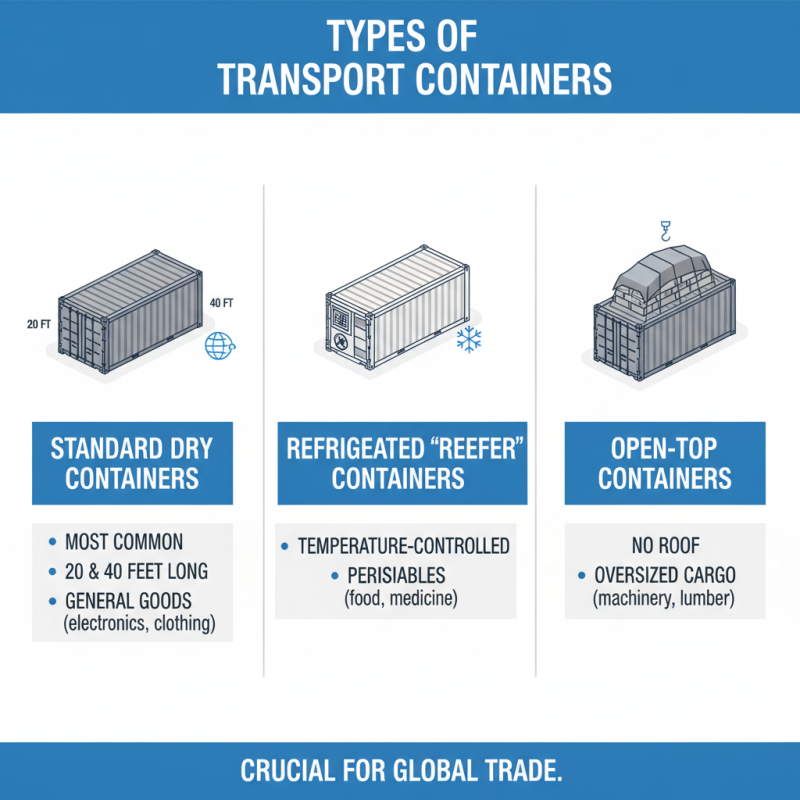
Container transport is a crucial component of global trade. The types of containers used in this system are diverse, each serving specific purposes. For instance, standard containers are the most common. They measure 20 and 40 feet in length. These containers can hold various goods like electronics, clothing, and machinery.
Reefer containers are another important type. They are temperature-controlled, making them ideal for transporting perishables. According to industry reports, the demand for reefer containers has surged by 5% annually. This increase reflects the rise in global food trade. Additionally, specialized containers like open-top and flat-rack containers are essential for oversized cargo. They can hold heavy machinery and construction materials.
While the container transport system is efficient, it is not without flaws. Delays can occur due to port congestion or customs issues. Moreover, a lack of standardization in container sizes can complicate logistics. According to a recent analysis, about 30% of containers face inefficiencies during their journey. The industry must continually adapt to these challenges for improved performance.
The Role of Technology in Container Transport Efficiency
Technology plays a crucial role in enhancing container transport efficiency. By integrating automation and data analytics, the industry aims to streamline logistics processes. For example, automated cranes can load and unload containers quickly. This reduces turnaround time at ports. However, not every port has adopted this technology. Some ports still rely on traditional methods. This inconsistency can lead to delays.
Tracking systems are another technological advancement. GPS and RFID allow real-time tracking of containers. This transparency helps businesses manage inventory better. Yet, not all companies utilize these systems effectively. Some still struggle with data overload. It’s important to address these gaps to improve efficiency.
The use of AI in logistics is growing. Predictive algorithms can optimize shipping routes. This reduces fuel consumption. However, reliance on technology poses risks. A system failure can lead to significant delays. Companies must balance innovation with risk management to enhance overall transport efficiency.