How to Choose the Right Third Party Logistics Provider for Your Business?
Choosing the right Third Party Logistics (3PL) provider can be challenging for businesses. According to industry expert Dr. Emily Chen, "The right logistics partner can transform your supply chain." Understanding your specific needs is crucial. Every business model is different; a one-size-fits-all approach rarely works in logistics.
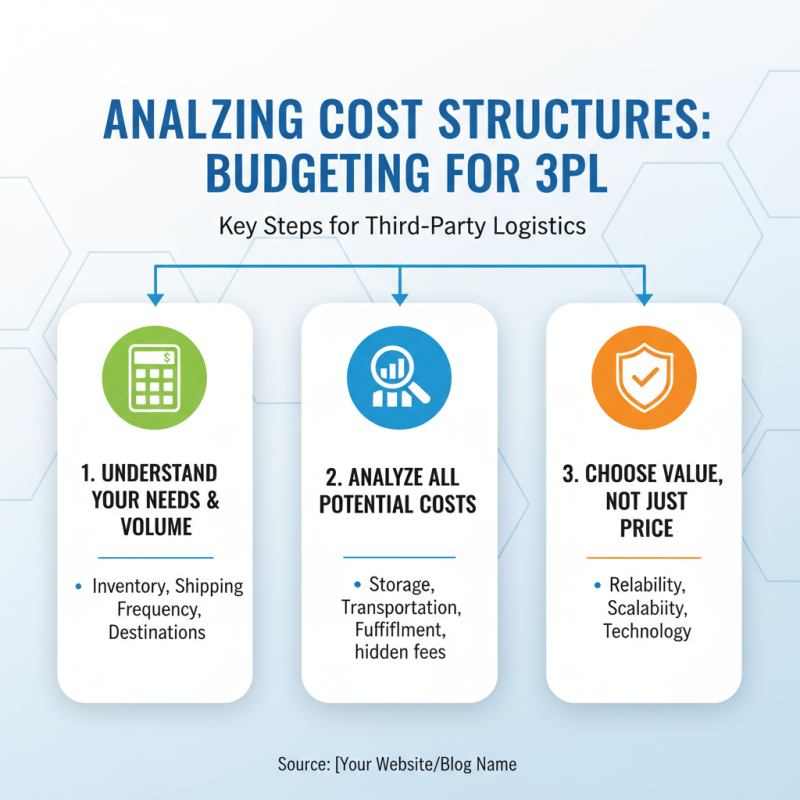
Effective 3PL selection hinges on understanding capabilities and compatibility. Look for providers that align with your business goals. Sometimes, companies overlook this vital aspect and choose based solely on cost. This can lead to future complications that are hard to rectify. Specific experiences matter greatly; consider asking potential providers about their past challenges and successes.
Furthermore, evaluate the technology a 3PL uses. Advanced technology can enhance visibility and efficiency. Yet, many businesses fail to prioritize this, risking operational bottlenecks. Remember, the decision should reflect your long-term vision. The partnership you form with a 3PL should be strategic, not just transactional.

Understanding the Role of Third Party Logistics (3PL) in Supply Chain Management
Third Party Logistics (3PL) plays a crucial role in supply chain management. They handle various logistics needs, such as transportation, warehousing, and distribution. Businesses rely on 3PL providers to enhance efficiency and reduce costs. However, not all 3PL providers meet the same standards. A mismatch can lead to delays and customer dissatisfaction.
Effective communication is essential in choosing the right 3PL. Understand their services in depth. Ask specific questions about their capabilities. How do they manage inventory? What technology do they use? Their answers should reflect transparency and reliability. Look for providers that align with your business goals.
Selecting a 3PL can be overwhelming. You might feel unsure about which metrics to prioritize. Some businesses focus solely on price, which can be misleading. A lower cost might indicate fewer services or hidden fees. Evaluate potential risks in your logistics operations. Reflect on past experiences where logistics fell short. This can provide valuable insights for your decision-making.
Key Factors to Assess When Evaluating 3PL Providers
Choosing the right third-party logistics (3PL) provider is essential for your business. One key factor to evaluate is their expertise in your specific industry. Each sector has unique challenges. Find a provider who understands those needs. Ask about their past experiences. You want someone who can anticipate issues and offer tailored solutions.
Another factor is technology integration. A 3PL provider should have advanced systems for tracking shipments. This helps ensure transparency in logistics operations. Inquire about their software capabilities. Seamless tech integration can save time and improve efficiency. However, remember that tech alone isn't enough. Assess their delivery performance and reliability over time.
Additionally, consider their scalability. Your business may grow or change. A suitable 3PL should adapt to your evolving needs. Flexibility matters when facing market fluctuations. Some providers may promise growth support but fall short later. Always probe deeper into their long-term commitments. It's crucial to find a partner who can truly align with your business ambitions.
How to Choose the Right Third Party Logistics Provider for Your Business? - Key Factors to Assess When Evaluating 3PL Providers
| Evaluation Criteria |
Description |
Importance Level (1-5) |
Example Metrics |
| Cost Structure |
Understanding the pricing model and overall cost-effectiveness. |
5 |
Shipping rates, handling fees, hidden costs. |
| Service Range |
Variety and quality of logistics services provided. |
4 |
Warehousing, transportation, order fulfillment. |
| Technology Integration |
Ability to integrate with your existing systems. |
4 |
API compatibility, TMS, WMS capabilities. |
| Scalability |
Ability to grow and adapt to your business needs. |
5 |
Response to volume changes, seasonal demand shifts. |
| Customer Service |
Quality and responsiveness of support provided. |
5 |
Response time, support availability, issue resolution. |
| Performance Metrics |
Measuring efficiency and effectiveness of the provider. |
4 |
On-time delivery rates, order accuracy. |
Evaluating 3PL Provider Capabilities: Technology, Services, and Scalability
Choosing the right third-party logistics (3PL) provider is crucial for business growth. One important factor is technology. According to a report by Logistics Management, over 70% of shippers prioritize tech-enabled services. Advanced tracking systems and automation can enhance efficiency. However, not all providers use cutting-edge technology. Some rely on outdated systems, which can hinder operational progress.
Services offered by 3PL providers vary significantly. Many companies expect warehousing, distribution, and inventory management as standard. Yet, data from Gartner shows that only 45% of 3PLs offer scalable solutions. This discrepancy can leave businesses with unmet needs. It is essential to ask about specific services tailored to your industry. Sometimes, providers can lack expertise in niche markets, which can lead to costly mistakes.
Scalability is another key element. The ability to grow with your business is vital. A recent study by Armstrong & Associates highlighted that nearly 60% of businesses feel inadequately supported during peak seasons. This can lead to shipping delays and lost sales opportunities. Investigate how potential partners handle fluctuations in demand. If they're inflexible, it might be time to reconsider your options.
Industry Trends: The Growing Importance of 3PL in E-Commerce Fulfillment
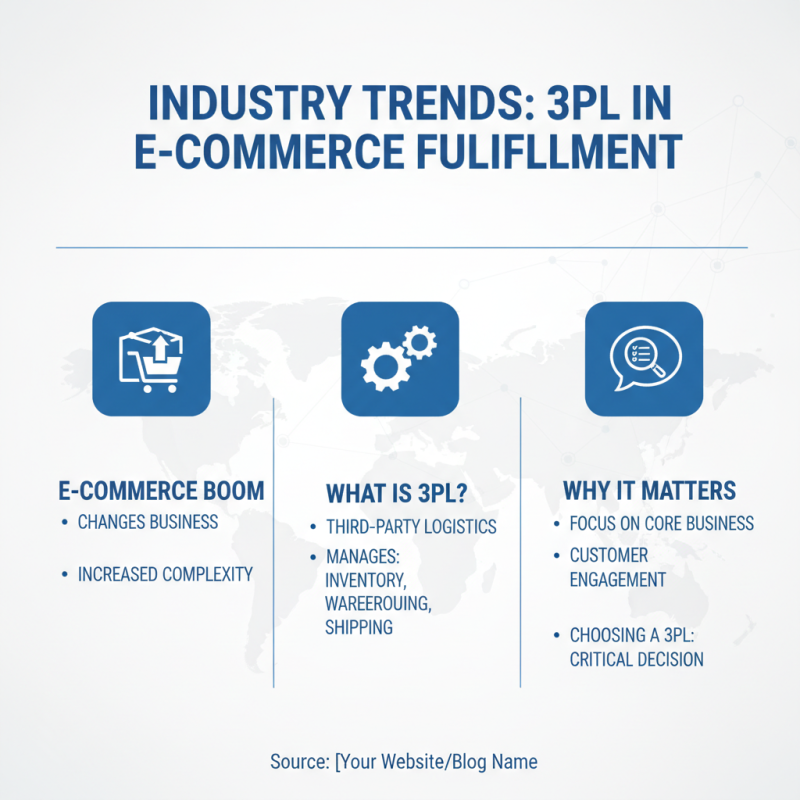
The rise of e-commerce has significantly changed how businesses operate. Third-party logistics (3PL) providers are becoming essential for many companies. They help manage inventory, shipping, and warehousing. This enables businesses to focus on core operations and customer engagement. However, the choice of a 3PL is not straightforward.
E-commerce trends show an increasing demand for fast and reliable delivery. 3PLs must adapt quickly. Companies look for flexibility in their logistics solutions. Some providers may not offer customizable options, which can hinder growth. Choosing a provider that understands specific industry needs is crucial. A mismatch can lead to delays and customer dissatisfaction.
Additionally, the integration of technology in logistics is vital. Real-time tracking and seamless communication can set a provider apart. Yet, not all 3PLs are equipped with the latest tools. Some may still rely on outdated systems, causing inefficiencies. Businesses must carefully evaluate potential partners to avoid these pitfalls. Selecting the wrong 3PL could negatively impact their reputation and bottom line.