What are the Best Third Party Logistics Providers for Businesses?
In today's competitive market, finding the right Third Party Logistics Providers (3PLs) is essential for success. Businesses rely on these providers to optimize supply chains and enhance operational efficiency. According to a report by Armstrong & Associates, the 3PL market reached a value of $208.8 billion in 2020, illustrating its growing significance. As businesses expand globally, the complexity of logistics increases.
“Selecting the best logistics partner can either make or break a business,” says logistics expert Dr. Jane Smith. Her insights emphasize the need for a careful evaluation of potential 3PL partners. Companies must consider factors such as reliability, technology, and service quality when making their choice. Yet, many firms overlook the importance of a strong logistics strategy, leading to inefficiencies.
Studies show that businesses utilizing 3PL services can reduce logistics costs by up to 10-30%. However, choosing the wrong provider can lead to severe financial repercussions. It’s a fine balance. An effective logistics partner can enhance customer satisfaction and streamline operations, while a poor choice may hinder growth. This is why understanding the landscape of Third Party Logistics Providers is crucial for modern businesses.

Understanding Third Party Logistics (3PL) Providers
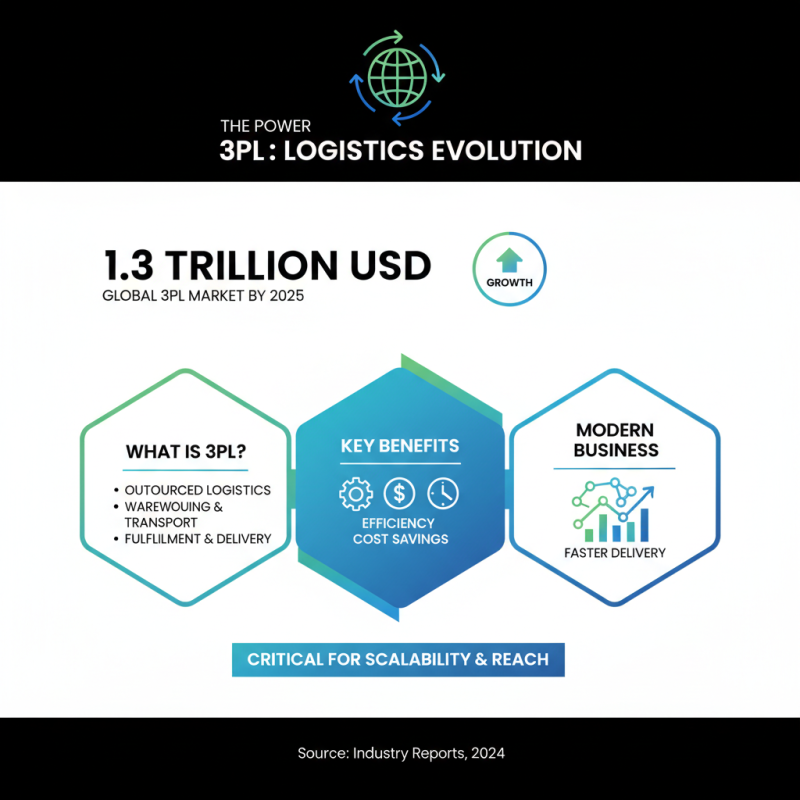
Understanding Third Party Logistics (3PL) Providers is critical for modern businesses. The logistics landscape is evolving rapidly. According to recent reports, the global 3PL market will reach over $1.3 trillion by 2025. This growth reflects the increasing reliance on third-party services.
3PL providers offer varied services including transportation, warehousing, and inventory management. They enable companies to focus on their core competencies. However, not all providers are created equal. A survey showed that 40% of businesses experience challenges in communication with their 3PL partners. Clear communication is essential for a successful collaboration.
Many companies seek flexibility and scalability in 3PL services. These qualities allow businesses to adapt to market changes. A growing trend shows that 75% of companies expect their 3PLs to be more tech-savvy. Yet, some providers lag behind in technology adoption. Businesses must carefully assess their partners to ensure alignment. Balancing costs with quality can be difficult. Nevertheless, a well-chosen 3PL provider can drive efficiency and growth.
Key Criteria for Selecting a 3PL Provider
Choosing the right third-party logistics (3PL) provider is crucial for businesses looking to optimize their supply chain. Key criteria to consider include reliability, technology integration, and scalability. According to a recent report by the Council of Supply Chain Management Professionals, 70% of companies prioritize reliability when selecting a 3PL. This highlights the need for consistent service and timely deliveries.
Technology integration is another essential factor. A study by Logistics Management indicates that 72% of shippers believe advanced technology capabilities enhance supply chain visibility. Providers that leverage automation and real-time tracking systems can streamline operations. However, not all 3PLs meet these tech needs. Businesses often find it challenging to assess a provider’s technology offerings accurately.
Scalability is crucial too. As companies grow, their logistics needs evolve. A 2022 survey revealed that 67% of businesses require flexible solutions from their 3PL partners. It’s vital to ensure that the chosen provider can adapt to these changes. However, many businesses overlook this aspect until it's too late. This can lead to inefficiencies and potential losses. Being prepared to ask the right questions and evaluate a provider critically will make the difference.
What are the Best Third Party Logistics Providers for Businesses? - Key Criteria for Selecting a 3PL Provider
| Criteria |
Description |
Importance Level |
| Cost Efficiency |
How well the 3PL can manage operational costs. |
High |
| Technology Integration |
The ability to integrate with existing technology and systems. |
High |
| Service Range |
The variety of services offered, such as warehousing and transportation. |
Medium |
| Scalability |
Ability to scale operations according to business needs. |
High |
| Customer Support |
Availability and quality of customer service. |
High |
| Geographic Coverage |
Regions and countries where services are offered. |
Medium |
| Reputation |
Overall market reputation and customer reviews. |
High |
Top 3PL Providers in the Industry: An Overview
When it comes to third-party logistics (3PL), choosing the right provider is crucial. There are many options available in the industry. These providers can handle everything from warehousing to transportation. They help businesses streamline operations and reduce costs. However, not every provider suits every business. Companies must assess their unique needs.
Some 3PLs excel in specific regions or product types. For instance, a provider might specialize in fashion logistics, while another focuses on electronics. This specialization can lead to better service but may also create limitations. Companies often overlook this aspect, which can be frustrating. Choosing a 3PL without considering alignment can result in inefficiencies.
Moreover, the technology used by these providers varies significantly. Some use state-of-the-art tracking systems, while others may rely on outdated methods. This disparity can impact delivery times and customer satisfaction. Businesses sometimes assume technology is uniform across all providers, which is a mistake. A deeper look at capabilities can reveal potential gaps and areas for improvement.
Comparative Analysis of 3PL Services and Solutions
When evaluating third-party logistics (3PL) providers, businesses must consider various factors. Cost-effectiveness is crucial, but it shouldn't overshadow the quality of service. Reliable communication can make or break partnerships. A 3PL that fails to keep clients informed about the status of shipments can lead to frustration and lost sales.
The services offered by different providers can vary significantly. Some specialize in warehousing, while others excel in transportation management. It’s essential to find a provider that aligns with specific business needs. Many companies rush into contracts without fully understanding the terms. Hidden fees or service limitations may surface later, causing strain.
Flexibility is another vital aspect. The logistics landscape shifts rapidly, and a rigid provider may struggle to adapt. Businesses should seek partners who can scale services as their needs grow. Many seem equipped at the start but fail to evolve over time. It’s wise to periodically assess the relationship and reflect on the outcomes.
Future Trends in Third Party Logistics Services
The landscape of third-party logistics (3PL) is evolving rapidly. Companies are seeking more flexible solutions to meet changing market demands. Advanced technology is reshaping operations. Automation and AI streamline processes, reducing human error. Yet, many providers struggle to keep pace with these advancements.
Environmental concerns are influencing logistics services too. Businesses are increasingly looking for sustainable practices. Green logistics reduces waste and enhances efficiency. However, challenges arise in implementing these practices across diverse supply chains. Providers must adapt and innovate to stay relevant.
Customer experience now plays a critical role. Personalized logistics solutions are in demand. Companies want transparency in their shipments. This requires robust tracking systems. Yet, some providers fall short in customer communication. They need to reflect on how to better meet client expectations, ensuring continuous improvement in service delivery.
Trends in Third Party Logistics Services