What Are the Benefits of Using Third Party Logistics?
In today’s fast-paced business environment, Third Party Logistics (3PL) has become essential for companies seeking efficiency. According to the 2023 Logistics Management survey, 79% of companies utilizing 3PL report improved supply chain management. This statistic illustrates the growing reliance on experienced logistics providers.
3PL offers a range of services that can enhance operational capabilities. From warehousing to transportation, these providers help businesses reduce costs and optimize resources. The 2022 State of Logistics Report noted that companies leveraging 3PL experienced a 15% reduction in logistics costs.
However, it’s important to acknowledge that working with third-party providers can pose challenges. Dependence on external partners may lead to a loss of control over logistics processes. Companies must evaluate potential risks and ensure alignment with their operational goals. The balance of benefits and drawbacks highlights the need for careful consideration of Third Party Logistics in any strategy.

Understanding Third Party Logistics (3PL)
Third-Party Logistics (3PL) providers offer essential services to businesses. They manage everything from transportation to warehousing. This expertise allows companies to focus on their core activities. Outsourcing these logistics processes often improves efficiency and reduces costs.
Many companies struggle with supply chain management. Partnering with a 3PL can alleviate some of this pressure. They have established networks and technology that optimize shipping routes. This can lead to faster delivery times. Choosing the right provider, however, requires careful consideration. Evaluate their experience and track record in your industry.
When selecting a 3PL, consider these tips. Look for providers that specialize in your market. This ensures they understand your unique challenges. Communication is vital. Ask how they will keep you informed about your shipments. Regular updates can prevent misunderstandings. Additionally, don't hesitate to request references from other clients. Their experiences will guide your decision.
What Are the Benefits of Using Third Party Logistics? - Understanding Third Party Logistics (3PL)
| Benefit |
Description |
Example Metrics |
| Cost Efficiency |
Outsourcing logistics reduces overhead costs and allows businesses to focus on core activities. |
Reduction in warehousing costs by up to 20% |
| Scalability |
3PL services can be easily scaled up or down based on demand fluctuations. |
Ability to increase shipping volume by 50% without extra infrastructure |
| Expertise |
3PL providers offer specialized knowledge and industry expertise that can enhance supply chain efficiency. |
Improved delivery times by 15% due to optimized routing |
| Technology Integration |
3PL providers often have advanced logistics technology and software for real-time tracking and management. |
Increased visibility with 95% accuracy in tracking shipments |
| Focus on Core Competencies |
By outsourcing logistics, companies can concentrate on their main business functions and improve overall productivity. |
Increase in sales by 10% due to improved resource allocation |
Key Advantages of Using Third Party Logistics
Utilizing third-party logistics (3PL) can greatly enhance operational efficiency for businesses. According to a 2022 study by the Logistics Management Institute, nearly 80% of companies reported improved supply chain performance after partnering with 3PL providers. The expertise of these providers allows businesses to focus on core activities while logistics are managed by specialists. This delegation can reduce costs significantly.
Another benefit is flexibility. A report from Deloitte noted that 67% of companies using 3PLs experienced increased agility in their supply chain. Businesses can quickly scale operations up or down based on market demands. This adaptability is crucial in today’s fast-paced environment. However, it’s vital to choose the right 3PL. Poor alignment can lead to communication breakdowns and inefficiencies.
Furthermore, third-party logistics companies often leverage advanced technology for better inventory management. A 2023 analysis revealed that firms utilizing 3PLs recorded a 15% decrease in inventory costs. While these advantages are compelling, reliance on a 3PL means a company must continuously monitor performance. Regular assessments are crucial to ensure that service levels are maintained. The potential for misalignment exists, which requires ongoing communication and evaluation.
Cost Efficiency through Third Party Logistics Solutions
Third-party logistics (3PL) can lead to significant cost savings for businesses. According to a report by Armstrong & Associates, 90% of companies using 3PL services report lower logistics costs. This can be attributed to economies of scale and enhanced operational efficiencies. By outsourcing logistics, companies can redirect their resources to core business activities, avoiding the expenses of maintaining in-house transportation and warehousing.
Using 3PL providers often reduces the need for capital investments in infrastructure. Businesses can save on costs like real estate, technology, and staffing. The Council of Supply Chain Management Professionals states that companies utilizing 3PL solutions can see a reduction in overall logistics costs by 10% to 30%. However, it’s essential to choose the right partner, as poor service can lead to hidden costs, affecting customer satisfaction and delivery times.
While the benefits are clear, potential pitfalls exist. A reliance on a third party may reduce control over logistics processes. Companies must ensure they maintain visibility and accountability throughout their supply chains. Despite these challenges, the strategic use of 3PL can bolster efficiency and strengthen competitive advantage across various industries.
Flexibility and Scalability in Supply Chain Management
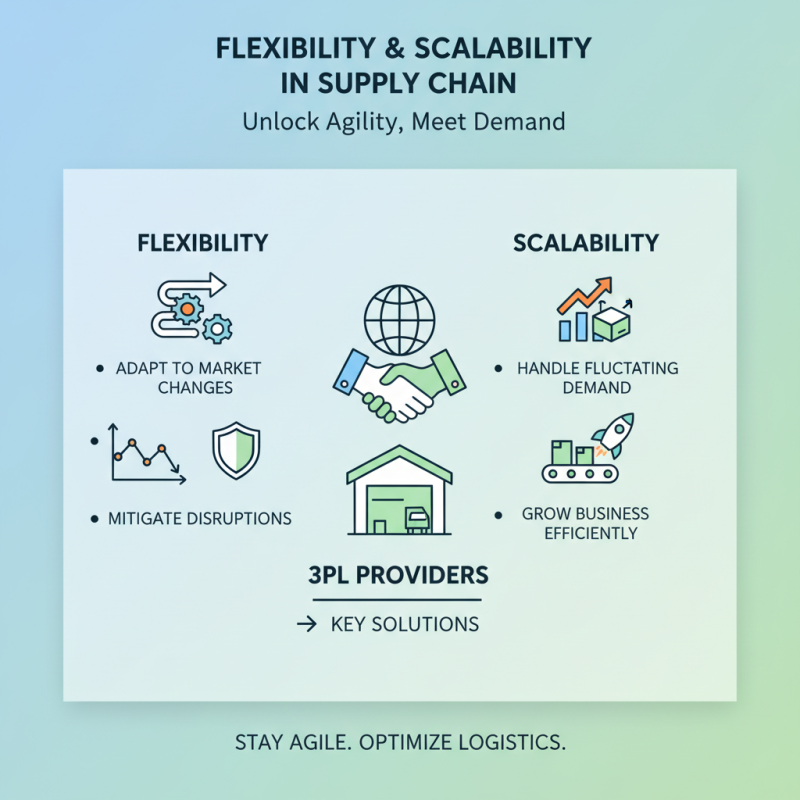
Flexibility and scalability are crucial elements in today's competitive supply chain management landscape. Companies often face fluctuating market demands. Third-party logistics (3PL) providers offer services to address such challenges. They can efficiently adapt to changing needs, ensuring businesses remain agile.
When a company experiences growth or seasonal spikes, 3PL services can quickly scale operations. This includes expanding warehouse space or increasing transportation capacity. Such adjustments help maintain service quality, even during high demand. However, relying on these providers requires a level of trust and communication. Misalignment can lead to inefficiencies or delays.
On the flip side, vulnerabilities exist. Companies may struggle with integrating 3PL systems with their own. Inconsistent information flow can hinder decision-making. Moreover, not all 3PL partners deliver the same quality of service. Businesses must evaluate potential partners carefully, ensuring they align with specific needs. Flexibility and scalability are vital, but they require strategic partnerships.
Enhanced Focus on Core Business Functions with 3PL
Third-party logistics (3PL) can transform how businesses operate. By outsourcing logistics, companies can concentrate on their core functions. This focus improves efficiency and enhances service quality. Logistics is complex and often requires specialized knowledge. By relying on 3PL providers, businesses can access this expertise.
Tips for choosing a 3PL provider: Look for a company with industry-specific experience. Assess their technology capabilities. Ensure they align with your operational goals.
Outsourcing logistics can streamline processes, but it's not without challenges. Companies must communicate their needs clearly. Misunderstandings can lead to inefficiencies. Finding the right partner is vital. Conduct thorough research and request case studies.
Using a 3PL provider doesn’t mean handing over all control. Businesses should maintain oversight to ensure alignment with strategic objectives. Regular performance reviews can help identify areas of improvement. While 3PL can drive growth, it’s essential to remain engaged with the logistics process.